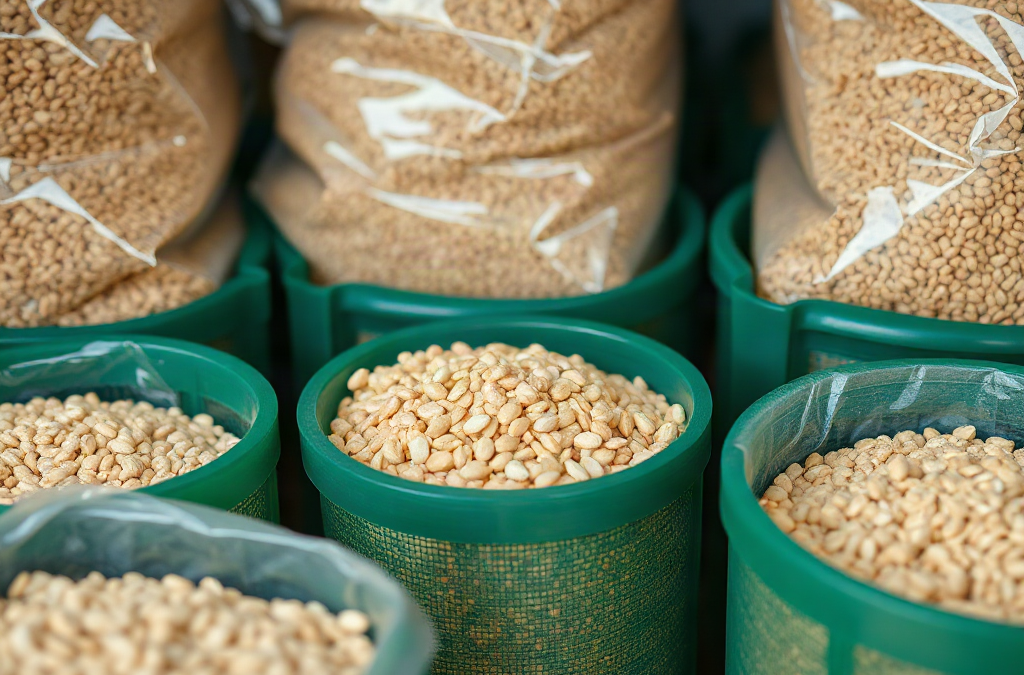
Quarantine newly purchased grain by keeping each lot separate from established food supplies, inspecting it for insects, webbing, moisture, odors, and damaged kernels, then treating and repackaging it before final placement. Use a clean, lidded container in a dry area away from your pantry while you observe the grain for emerging stored-product pests. Freezing suitable dry grain can kill insects across their life stages, but the package must remain sealed while returning to room temperature to prevent condensation. Label every lot with its source, purchase date, grain type, and treatment date, and discard grain showing mold, persistent dampness, chemical contamination, or extensive insect damage.
Set Up a Separate Quarantine Area
A useful quarantine area prevents a questionable purchase from exposing grain already in storage. Pantry moths, weevils, flour beetles, and other stored-product insects can arrive as adults, larvae, or eggs that are too small to notice during a quick inspection. Leaving a new bag beside older containers defeats the purpose even if the bag looks clean from the outside.
Choose a dry location physically separated from the main pantry or long-term food supply. A utility room shelf, enclosed cabinet, or sturdy tote in a climate-controlled space can work. Avoid damp basements, hot garages, outdoor sheds, and places where condensation forms. Quarantine is an observation and containment step, not permission to hold grain under poor conditions.
Set the new purchase inside a clean, smooth-sided tote with a fitted lid. The tote serves as secondary containment if insects leave the original package, but it should not be assumed to make damp grain safe. Do not combine purchases from different stores, farms, bulk bins, or delivery dates. Keeping lots separate makes it possible to identify the source of a problem and discard or treat only the affected grain.
Record the grain type, seller, purchase date, lot or best-by information when available, and package condition. A strip of removable tape on the quarantine tote is sufficient. If several bags came from the same lot and were transported together, they may be quarantined as one group, provided each bag can still be inspected.
A compact setup should include:
- Secondary containment: a clean tote or rigid container with a secure lid.
- Inspection tools: a tray, flashlight, scoop, and magnifier if available.
- Labels: source, date, grain, lot identification, and any treatment performed.
- Separation: enough distance that crawling insects cannot readily reach established supplies.
The common failure is using the final storage bucket as the quarantine container and placing it immediately among older buckets. If an infestation appears, nearby food and storage equipment may already be exposed. Readers planning a larger rotation system can use this How to quarantine newly purchased grain procedure as the intake stage before permanent storage.
Inspect the Grain and Its Packaging
Inspection should evaluate both food quality and evidence of pest activity. Begin with the unopened package. Look for pinholes, split seams, powder caught in folds, insect skins, webbing, moisture stains, and movement beneath clear packaging. A cardboard carton or woven sack may conceal damage, so inspect the bottom and closure closely.
Open the package inside the quarantine area rather than over a pantry counter. Pour a representative amount onto a light-colored tray and spread it into a shallow layer. Check for live insects, larvae, silk-like strands, clumped grain, unusual dust, hollow kernels, and small exit holes. Turn the sample slowly because insects may hide beneath kernels when exposed to light.
Smell the grain before transferring it. Sound dry grain should have a mild odor characteristic of the crop. Mustiness, sourness, fermentation, solvent-like odors, or a strong chemical smell call for caution. Insect treatment does not reverse mold growth, chemical exposure, rancidity, or deterioration caused by moisture. Grain that is visibly moldy, persistently damp, or contaminated by fuel, pesticides, cleaners, or rodent waste should not be salvaged for food.
Consider the form of the product when interpreting dust. A little chaff or meal at the bottom of a farm-packed bag may come from handling, while fresh powder accumulating around bored kernels can indicate feeding insects. Likewise, one dead beetle on an outer sack is different from larvae and webbing distributed through the grain. The first finding warrants careful containment and inspection; the second suggests an active infestation that may justify rejection or disposal.
Package claims are not a substitute for examination. Commercially sealed grain can still be damaged in transit, while clean grain purchased directly from a grower may simply contain more field debris than highly processed retail grain. Evaluate the actual lot rather than assuming that price, packaging style, organic status, or seller size predicts its condition.
If the purchase is expensive or difficult to replace, contact the seller before treating or repackaging it. Photographs of package damage, insects, lot markings, and the tray sample can support a return request. Once grain is frozen, cleaned, or transferred, proving its original condition becomes harder. That tradeoff matters when deciding whether to reject a visibly infested shipment or treat a lightly affected lot intended for personal use.
Choose an Appropriate Insect-Control Method
Freezing is a practical household treatment for many dry whole grains when the freezer can hold the package and maintain a reliably cold temperature. It avoids adding chemicals and can address insects hidden within kernels, but success depends on the entire grain mass becoming cold enough for long enough. A densely packed bucket cools much more slowly than several flat, manageable bags.
Divide dry grain into freezer-safe packages that the appliance can cool efficiently. Remove excess air where practical, seal the packages, and keep them frozen for several days rather than relying on a brief overnight exposure. Household freezers cycle, package sizes differ, and the center of a large mass takes time to cool. For that reason, a conservative multi-day treatment is more dependable than guessing from the surface temperature.
After freezing, keep each package sealed until the grain has returned fully to room temperature. Opening a cold bag in warm, humid air allows moisture to condense on the kernels. That moisture may create a more serious storage problem than the insects being treated. Wipe condensation from the outside of the package, but do not break the seal merely to check whether the grain feels cold.
Heat can control stored-product insects, but it is less forgiving in a home setting. Uneven heating may leave cool pockets where pests survive, while excessive heat can reduce seed germination, alter baking performance, or damage quality. Ordinary oven treatment is especially difficult to manage accurately across a thick layer of grain. Grain reserved for planting should not be exposed to either heat or freezing without confirming how the particular crop and treatment may affect viability.
Get Whole Wheat Flour, Grains and Milling Supplies – CLICK HERE 
Oxygen-reduced storage can be useful for long-term protection when dry grain is packed correctly in suitable barrier materials with oxygen absorbers. It is not a repair method for damp, moldy, rancid, or chemically contaminated food. Absorbers also should not be placed casually in thin retail bags or containers that admit air. The package, fill volume, seal, and moisture condition all affect the result.
Cleaning by sieving or hand sorting removes debris and visible insects but may miss eggs or larvae inside kernels. Treat cleaning as a quality step, not complete pest control. For a household lot, freezing followed by sealed warming and inspection is often easier to execute consistently. Larger quantities may require commercial grain-management practices rather than improvised household treatment. The method described in How to quarantine newly purchased grain should therefore be scaled to the volume, packaging, intended use, and available temperature control.
Monitor, Repackage, and Release the Lot
Observation after treatment confirms whether the process worked and whether the grain remained dry. Place the sealed packages back in the quarantine tote and inspect them periodically under good light. Watch for fresh insects, webbing, new powder, clumping, moisture droplets, package swelling, or an odor that was not present at intake. A clean tray beneath the packages can make escaped insects and spilled meal easier to notice.
There is no single quarantine duration that fits every grain, package size, room temperature, or pest species. A practical household approach is to maintain separation long enough to complete inspection, treatment, warming, and a follow-up observation period. Warmer conditions can make insect activity apparent sooner, whereas cool storage may slow development and create false confidence. Time alone does not make a lot safe; the decision should be based on condition, treatment completion, and repeated checks.
Once the lot passes inspection, transfer it into clean, food-grade storage materials suited to the planned storage period. Short-term pantry grain may go into rigid containers with tight lids. Longer storage commonly calls for a stronger moisture and oxygen barrier, dependable seals, and protection from rodents and physical damage. Never pour a new lot on top of old grain. Empty and clean the container first, then keep the newly approved lot identified by source and date.
Use a simple release checklist before moving the grain:
- Confirm that no live pests, webbing, or fresh feeding dust are present.
- Verify that the grain is dry, loose, and free of musty or chemical odors.
- Ensure frozen packages have warmed while sealed and show no internal condensation.
- Move the lot into a clean container and apply a durable label.
- Place older approved grain ahead of the new lot so it is used first.
Repeated insect activity after treatment indicates failure, reinfestation, or inadequate containment. Do not keep reopening the lot beside established food while deciding what to do. Isolate it again, inspect neighboring goods, clean spilled grain and dust, and decide whether retreatment is reasonable or disposal is safer. Mold, unexplained dampness, rodent contamination, and chemical odors are stronger rejection signals than the presence of a few removable field particles.
Good records turn quarantine into a repeatable intake process. A label showing purchase, inspection, treatment, and release dates allows later problems to be traced without opening every container. Applying the same How to quarantine newly purchased grain routine to each incoming lot also protects rotation: older food remains identifiable, and a new purchase never disappears anonymously into the reserve.
Frequently Asked Questions
Can newly purchased grain go directly into airtight buckets?
No. Inspect and, when appropriate, treat the new lot before permanent packing. Immediate placement can conceal insects or moisture and expose nearby supplies when the bucket is opened.
How long should grain remain in quarantine?
Keep it separate through inspection, any selected treatment, sealed return to room temperature, and follow-up observation. The condition of the grain matters more than an arbitrary number of days.
Does freezing make moldy grain safe?
No. Freezing may control insects, but it does not restore moldy, damp, rancid, chemically contaminated, or rodent-contaminated grain to acceptable food quality.
Should every grain purchase be frozen?
Not necessarily. Consider the grain form, package condition, intended use, freezer capacity, and whether the grain must remain viable for planting. Inspection and separation remain useful even when freezing is unsuitable.
Can different new grain lots share one quarantine tote?
They may share secondary containment if each package stays sealed, labeled, and independently inspectable. Separate totes provide better traceability when lots come from different sources or show different conditions.
Conclusion
A dependable grain intake routine is built around separation, evidence, and traceability. Keep every incoming lot away from established reserves, examine both the package and a representative sample, and distinguish treatable insect concerns from mold, moisture, chemical exposure, or rodent contamination. If freezing is appropriate, divide the grain into manageable sealed packages and let them warm before opening so condensation does not undermine the treatment.
Release the lot only after a follow-up inspection shows dry grain, intact packaging, no fresh pest activity, and no objectionable odor. Then use clean food-grade storage, preserve the lot identity, and rotate older supplies first. If warning signs continue after treatment, return, discard, or reassess the affected lot rather than risking the rest of the food supply.
Get Whole Wheat Flour, Grains and Milling Supplies – CLICK HERE
Related Content
Auto Amazon Links: No products found.