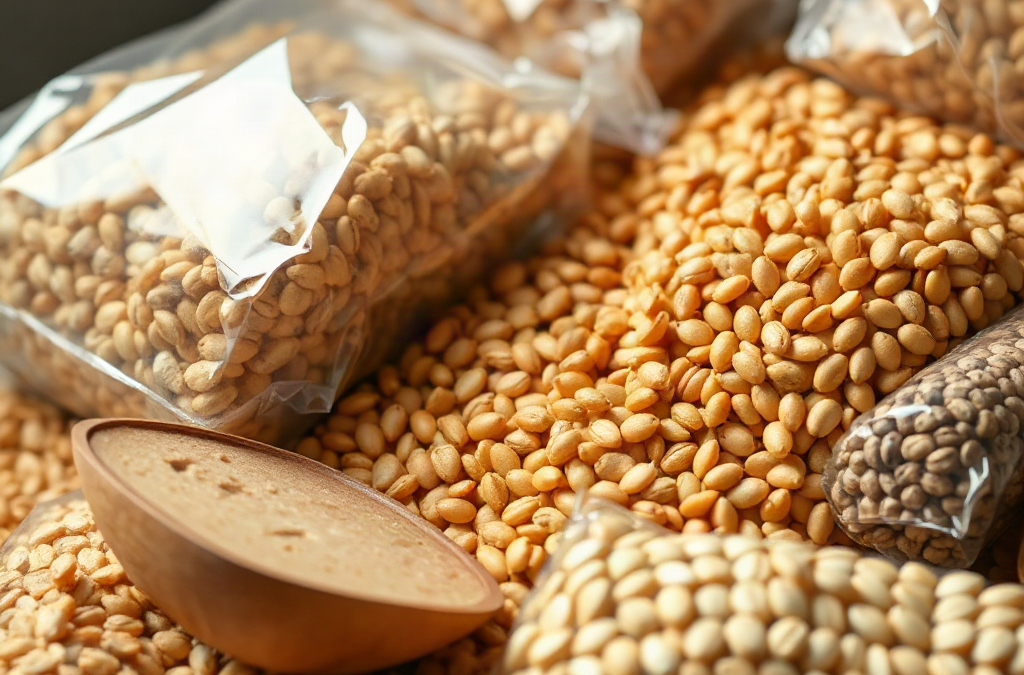
Rotate mixed grain stocks by earliest usable life, not purchase date alone: consume opened packages first, then lots with damaged barriers or questionable storage history, followed by naturally shorter-lived grains, and Ultimately intact long-life staples. This modified first-expiring, first-out order accounts for moisture exposure, heat, oxygen, grain fat content, package integrity, and actual condition. Keep each grain and lot separate so a newer but compromised bag can move ahead of an older, well-sealed container. Inspect before use, and discard grain showing mold, insects, damp clumping, or persistent off odors rather than treating rotation as proof that it remains safe.
Which Grain Stock Should Be Used First?
The first stock to use is the sound grain with the shortest remaining usable life. That is a more reliable rule than ordinary first-in, first-out because mixed inventories rarely age at the same rate. A recently purchased bag that was opened, stored in heat, or exposed to humid air may deserve earlier use than an older lot sealed under stable conditions.
A practical sequence begins with open containers that are still in good condition. Once a package has been opened, its contents face repeated air exchange, handling, and possible moisture entry. Next come intact but vulnerable packages, including thin retail bags, containers with uncertain seals, and lots that experienced a warm or damp storage period. Properly sealed stocks kept under cooler, dry, stable conditions can remain later in the queue, subject to regular inspection.
Rotation should therefore combine first-expiring, first-out with a condition check. Printed dates and packing dates are useful records, but they do not reveal every change in the storage environment. A lot moved through a hot garage, for example, should not automatically remain behind an older bucket kept in a cool interior room. Heat can accelerate quality loss, while moisture can create a more immediate spoilage concern.
| Rotation Priority | Stock Condition | Recommended Action |
|---|---|---|
| 1 | Opened and sound | Use promptly while checking each portion |
| 2 | Compromised package but no spoilage evidence | Inspect carefully, repackage if appropriate, and move forward |
| 3 | Shorter-lived or higher-fat grain | Schedule ahead of lean, intact whole kernels |
| 4 | Older lot in sound packaging | Use before equivalent newer lots |
| 5 | Newer, intact long-life staple | Keep in reserve and continue monitoring |
This order applies only to grain that passes inspection. Rotation is an inventory decision, not a way to rescue questionable food. A common failure is moving a damaged package directly into the kitchen merely because it is next in line. If the grain has visible mold, damp clumps, active insects, or an unexplained musty or rancid odor, isolate it from the remaining inventory and evaluate it for disposal rather than consumption.
How Does Grain Type Change Rotation Priority?
Grain composition and processing affect how quickly quality declines after packaging. Whole, intact kernels generally expose less interior surface area than cracked, rolled, or milled forms. Processing makes preparation faster, but it also gives oxygen and environmental moisture greater access to the grain. For rotation purposes, flour, meal, cracked grain, and flakes normally belong ahead of comparable intact kernels stored under similar conditions.
Fat content matters as well because oils can develop stale or rancid flavors through oxidation. Brown rice retains its bran and germ, so it generally merits earlier rotation than white rice when packaging and storage conditions are otherwise equal. Oats and some whole-grain products also contain more exposed or accessible oils than leaner, intact staples. That does not provide a universal expiration date; temperature, oxygen exposure, moisture, processing, and packaging can change the outcome substantially.
Consider a pantry holding rolled oats, brown rice, pearled barley, hard wheat berries, and white rice. If all were purchased together in ordinary retail packaging, the opened rolled oats would usually move first. Brown rice would commonly follow before the white rice and intact wheat. Yet packaging can reverse part of that order: brown rice in an intact high-barrier package may be less urgent than white rice kept in a torn bag during humid weather.
The useful comparison is not simply grain against grain. Compare the specific form, package, environment, and lot condition. Use these factors to set a starting priority:
- Move forward: milled, rolled, cracked, pearled, or opened products; higher-fat grains; weak packages; warm-storage lots.
- Move back: intact kernels in sound moisture-and-oxygen barriers with documented, stable storage.
- Remove from rotation: lots with evidence suggesting spoilage, contamination, or an active infestation.
A frequent misconception is that every whole grain belongs in one shared age sequence. Mixing wheat, oats, rice, and corn under a single purchase-date rule hides meaningful differences. Establish a queue within each grain type first, then compare the leading lot from each queue based on vulnerability. This preserves variety without forcing a durable staple ahead of a more perishable product merely because the durable staple was purchased a few weeks earlier.
Building a Lot-by-Lot Rotation System
A dependable rotation system tracks lots rather than treating several containers as one undifferentiated supply. Each package should retain its grain name, form, purchase or packing date, opening date when applicable, package type, and any unusual storage exposure. A short note such as “garage heat, three days” carries more decision value than a precise date with no storage history.
Keep older lots physically accessible, but avoid combining them automatically. Topping up a partly empty container with a new purchase erases lot boundaries and can spread insects or moisture from one batch into another. It also makes the age of the resulting mixture impossible to interpret. Empty, inspect, clean, and dry a reusable container before filling it with a different lot; preserve the new lot’s identifying information on the container.
A workable monthly or meal-planning routine has five steps:
- Review open packages and place sound ones at the front of the cooking queue.
- Inspect seals, lids, liners, and containers for holes, looseness, condensation, or other changes.
- Compare grain form and likely vulnerability rather than sorting solely by purchase date.
- Assign the next several meals to the highest-priority sound lots.
- Record what was opened, repackaged, isolated, discarded, or fully used.
For example, suppose two buckets of wheat berries sit behind a retail bag of oats and three bags of rice. One wheat bucket is older but remains sealed; the other was recently opened. Put the opened wheat into near-term meal plans, but do not necessarily consume it before an already-open bag of oats. The oats’ processing and exposed package may make them more urgent. The unopened wheat bucket can remain behind both while its seal and storage area are monitored.
Get Whole Wheat Flour, Grains and Milling Supplies – CLICK HERE 
Signs that the system is working include clear lot identities, no mystery containers, declining amounts in open packages, and predictable use before quality deteriorates. Warning signs include multiple open packages of the same grain, handwritten dates without grain forms, repeated topping-up, or containers buried so deeply that they cannot be inspected. Buying more than the household routinely eats also defeats rotation. A smaller working supply that cycles through familiar recipes often performs better than a larger inventory built around foods rarely prepared.
When Should Condition Override the Planned Order?
Condition should override the schedule whenever a package or its contents show a meaningful change. A planned queue assumes every lot remains sound between reviews. Leaks, condensation, flooding, pest activity, heat exposure, and broken seals invalidate that assumption and require immediate isolation and inspection.
Start outside the package. Look for punctures, gnawing, webbing, loose lids, failed seals, rust, staining, or moisture beneath the container. After opening a lot selected for use, check for insects, unusual dust accumulation, damp kernels, clumping, discoloration, and odors that differ from the grain’s normal aroma. Rancid odors may be described as paint-like, bitter, soapy, or stale, but odor descriptions are subjective; an unfamiliar persistent smell is a reason not to taste the grain as a test.
Not every issue has the same implication. A faded label can be corrected if the lot identity is known. A torn outer bag discovered while the grain remains clean, dry, odor-free, and otherwise normal may justify careful transfer into a clean, dry container and earlier use. By contrast, visible mold or wet grain is not a repackaging problem. Discarding a questionable lot may be the prudent choice because removing visible patches does not establish that the remainder is suitable.
An infestation also changes priorities beyond the affected package. Isolate it so insects cannot migrate, then inspect adjacent containers, seams, shelves, and spilled grain. Do not pour the affected contents through the rest of the stock or merge them with a clean lot. Local food-safety or extension guidance can help when the source or severity is uncertain, particularly after water intrusion or extensive temperature abuse.
The common mistake is equating “use first” with “must use.” Rotation determines which acceptable stock receives attention next; inspection determines whether that stock should enter a meal at all. When evidence is ambiguous, protecting the remaining supply matters more than recovering one container. Record the event, clean the storage area, inspect neighboring lots, and correct the underlying cause—such as a loose lid, humid location, or pest entry point—before restoring the queue.
Frequently Asked Questions
Should mixed grain stocks follow first-in, first-out?
Use first-in, first-out only among comparable lots. Open packaging, shorter-lived grain forms, heat exposure, or a damaged barrier can move a newer lot ahead of an older, well-protected one.
Should flour be rotated before whole kernels?
Usually, yes, when storage conditions and packaging are similar. Milling exposes more surface area to oxygen and moisture, so flour generally deserves earlier use than intact kernels.
Can old and new grain be combined in one container?
Keeping lots separate is safer for tracking and inspection. Combining them obscures age and may transfer insects, moisture, or quality problems from one lot to another.
Does a best-by date determine the rotation order?
It is one useful record, not the sole decision point. Package integrity, opening date, grain form, storage temperature, humidity exposure, and current condition may justify changing the order.
What should happen to grain with an unusual odor?
Isolate it and do not taste it to identify the problem. Persistent musty, rancid, or otherwise abnormal odors can indicate deterioration or moisture trouble and warrant cautious disposal.
Conclusion
A useful grain queue reflects what is most vulnerable now, not merely what entered the storeroom first. Separate every lot, document opening and exposure, and compare processing, fat content, package quality, and environmental history before assigning meal priority. Opened and processed products generally need earlier attention, while intact kernels in sound barriers can remain later in reserve.
Review the stock often enough to notice a failed seal or moisture event before it affects neighboring containers. Plan upcoming meals around the highest-priority sound lots, and avoid opening duplicates until the current package is nearly finished. Most importantly, keep inspection separate from rotation: an early place in the queue never makes moldy, wet, insect-damaged, or persistently off-smelling grain acceptable. Update labels, isolate questionable lots, correct storage problems, and rebuild the order whenever conditions change.
Get Whole Wheat Flour, Grains and Milling Supplies – CLICK HERE
Auto Amazon Links: No products found.