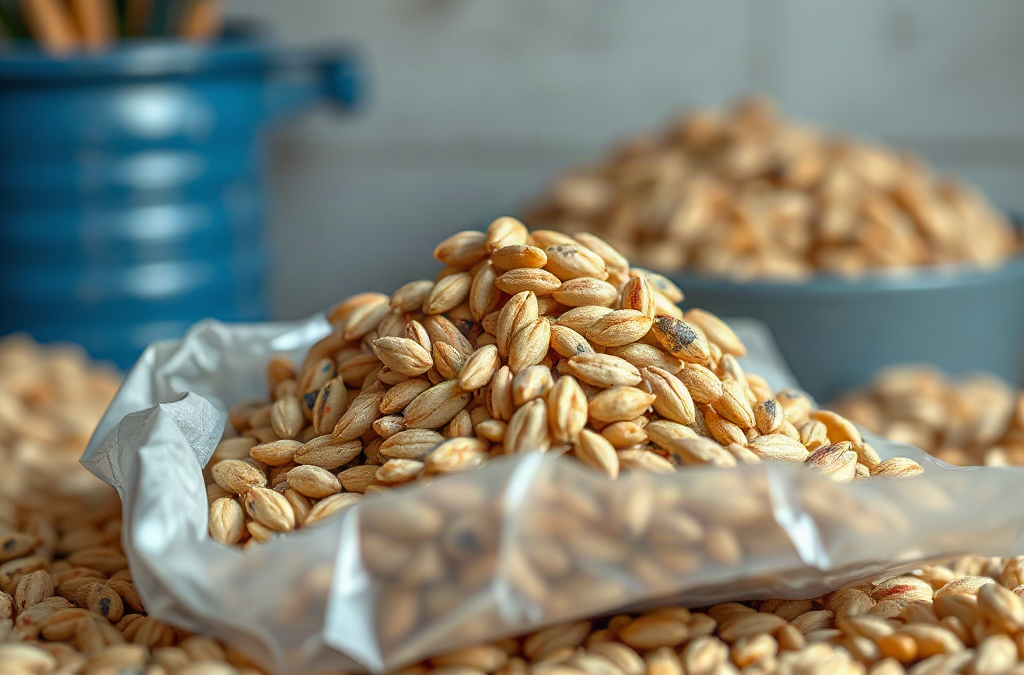
Dispose of insect-infested grain safely by isolating the container, preventing insects from escaping, and confirming the approved disposal route with your local waste authority. For a small household quantity, place the grain in a durable sealed bag, enclose that bag in a second one, and put it in the designated refuse stream if local rules allow. Do not eat, donate, sell, or casually feed the grain to animals, and never scatter it outdoors or add it to an unmanaged compost pile. Large farm or commercial lots require coordinated handling because transport, pesticide residues, environmental restrictions, and disposal costs may affect the decision.
Assess and Isolate the Infested Grain
Active insects, webbing, larvae, cast skins, or powder collecting around kernels indicate that the affected grain should be separated from sound food immediately. Move nearby packages away rather than carrying the infested container through a pantry, storeroom, or processing area. If the container is leaking, place the entire package inside a sound lidded bin or heavy bag before moving it.
Isolation limits two different problems. Adult beetles and moths may leave the grain and infest flour, cereal, seed, animal feed, or other dry goods. Fine dust and loose kernels can also fall into shelving joints, equipment, or floor cracks, where overlooked insects continue developing. A container that appears closed may not be insect-proof if it has torn seams, loose lids, ventilation openings, or thin packaging that larvae can penetrate.
Before choosing a disposal route, note the quantity, grain type, storage location, visible moisture, unusual odor, and any chemical treatment applied to the lot. Damp clumps, mold growth, heating, or a sour or musty odor point to deterioration beyond an insect problem. Avoid opening the container repeatedly to estimate the damage; each inspection gives mobile pests another opportunity to escape.
Do not assume that removing visible insects makes the grain suitable for people or animals. Eggs and larvae can remain inside kernels, while moisture damage or mold may coexist with the infestation. Screening may have a role in commercial grain management after qualified evaluation, but a kitchen sieve is not a reliable safety assessment. Similarly, cooking kills many insects but does not establish that deteriorated or chemically treated grain is appropriate to consume.
Keep the lot clearly marked and separate until its destination is settled. A short label such as “Infested—Do Not Use” reduces the chance that another person will mill, cook, donate, or feed it. If the grain belongs to a commercial operation, preserve lot records, photographs, treatment records, and representative observations before disposal. Those details may be needed for inventory control, insurance, contractual discussions, or advice from an extension specialist.
How Should Small Amounts Be Discarded?
Household quantities are usually managed by secure containment followed by an approved municipal waste route. Check the rules of the local trash service or transfer station first, especially if the grain has been treated with an insecticide, fumigant, or other stored-product chemical. Disposal requirements can differ by location, and a product label may restrict how treated material or its packaging is handled.
For untreated grain that the local service accepts with ordinary refuse, transfer the package as little as possible. Put the original container into a thick, intact bag, expel excess air without crushing it, and tie or seal the bag. Enclose it in a second bag if the first package is paper, damaged, or visibly crawling with insects. Place it in the outside waste container close to collection time so pests are not held beside the home for several days.
A practical household sequence is:
- Close the area. Keep food preparation and clean storage containers away from the work site.
- Contain the package. Bag the original container rather than pouring loose grain into a new one.
- Confirm acceptance. Ask the waste provider where food material and chemically treated grain belong.
- Move it promptly. Carry the sealed package directly to the approved outside receptacle or facility.
- Inspect for leakage. If kernels or insects escape, collect them immediately and reseal the outer bag.
Freezing a small sealed package before disposal can stop insect activity and reduce the chance of escape while the material is handled. It is a containment aid, not a disposal method: the dead insects and grain still need an approved destination. The package should remain sealed during freezing and afterward so condensation and insects do not spread inside the freezer or kitchen.
Open composting is a poor default. Grain is energy-rich, can attract rodents and wildlife, and may allow insects to survive near buildings if the pile does not reach and maintain effective composting conditions. A well-managed municipal or commercial composting program may accept food grain, but acceptance should be confirmed in advance. Never put pesticide-treated grain into compost unless the product directions and receiving facility explicitly permit it.
What Should You Do With a Large Grain Lot?
Bulk grain requires a disposal plan before unloading, hauling, or mixing begins. Contact the local solid-waste authority and an agricultural extension office or relevant crop adviser for location-specific options. A commercial landfill, permitted composting facility, rendering or processing outlet, or another regulated destination may be appropriate, but acceptance depends on the material, local rules, treatment history, and facility capabilities.
Keep the infested lot segregated from marketable grain while options are evaluated. Blending damaged grain into sound grain hides the problem, enlarges the affected lot, and may violate a sales contract or applicable requirements. Moving it through shared augers, conveyors, trucks, or bins can also seed insects throughout equipment that must then be emptied and cleaned.
Transportation is part of containment. Trucks, totes, and trailers should prevent kernels and insects from escaping during loading and travel. Use covers and sound closures appropriate to the equipment, avoid overfilling, and plan a direct route to a facility that has already agreed to receive the material. Sweeping spilled kernels from the yard after loading is less effective than preventing the spill, particularly around cracks, weeds, drainage channels, and neighboring grain storage.
Burial or land application should not be improvised. Site restrictions may address groundwater, surface drainage, odors, pests, chemical residues, and the volume of organic material placed in one location. Grain dumped in a shallow pit can germinate, ferment, attract animals, or remain accessible to insects. Burning is likewise unsuitable unless specifically authorized and managed under applicable fire, air-quality, and waste rules.
Get Whole Wheat Flour, Grains and Milling Supplies – CLICK HERE 
Animal feed should be considered only after appropriate professional and regulatory review. Insects alone do not answer questions about mold, mycotoxins, spoilage, pesticide use, nutritional suitability, or feed restrictions. A bargain sale or informal giveaway can transfer risk rather than solve it. For a significant lot, document who approved the destination, the amount removed, the carrier, the disposal date, and any facility receipt.
The least expensive option at first glance may create the highest downstream cost. Dumping grain on the property avoids a hauling charge but can establish pests near clean bins and attract wildlife. A controlled disposal fee may be more economical than cleaning multiple structures, rejecting a blended shipment, or managing contaminated runoff later.
Prevent Insects From Spreading After Disposal
Disposal is incomplete until the storage area and handling equipment have been checked for surviving insects and spilled grain. Empty the affected shelf, bin, cabinet, auger, or tote as far as practical. Vacuum cracks, seams, corners, ledges, and fastener holes where kernels and flour-like dust collect. Seal the vacuum contents in the same manner as the discarded grain and move them outside promptly.
Dry physical cleaning should come before washing. Introducing water into dusty grain residues can create paste in joints and leave moisture that supports spoilage. After loose material is removed, clean suitable hard surfaces according to the equipment or container manufacturer’s directions and allow them to dry fully. Food-contact containers should not be reused if they cannot be inspected, cleaned, and dried effectively.
Examine nearby dry foods individually. Look for holes in kernels, webbing around package folds, insects under lids, and fine residue that reappears after cleaning. Do not spray household insecticide onto food, grain, food-contact surfaces, or inside containers unless the product label specifically permits that use. Spraying exposed adults while leaving grain dust and hidden larvae in place often masks activity without removing its source.
Monitoring shows whether containment worked. Clean the area, record the date, and inspect it regularly over the following weeks. A small stored-product insect trap may help reveal adult activity, but it does not replace inspection or sanitation. New insects near an emptied shelf suggest that another package, a wall void, spilled grain, or shared equipment remains affected.
Before restocking, correct the condition that allowed the infestation to expand. Thin retail bags offer little long-term protection once brought into a warm storage area. Sound containers with tight-fitting lids, smaller lot sizes, clear purchase dates, and first-in-first-out rotation make inspection easier and limit the amount lost if insects appear. New grain should be examined before it is combined with older stock.
A common failure is returning clean grain to the area as soon as the visible package is gone. Waiting until cleaning, inspection, and follow-up monitoring show no continuing activity provides better evidence that the source was removed. If insects persist despite removing all accessible food, a licensed pest-management professional can evaluate structural harborages and select measures appropriate for a food-storage setting.
Frequently Asked Questions
Can insect-infested grain go in household trash?
Often it can if it is untreated, securely double-bagged, and accepted by the local waste service. Confirm local requirements and keep the sealed package outside until collection.
Can I compost grain that contains insects?
Unmanaged composting can spread pests and attract rodents. Use composting only when a managed facility accepts the grain and no pesticide treatment or local rule makes that route unsuitable.
Does freezing make infested grain safe to eat?
No. Freezing can stop insect activity, but it does not evaluate mold, spoilage, contamination, or chemical residues. It is useful for containment before disposal, not as proof of food safety.
Can infested grain be fed to chickens or livestock?
Do not assume it is suitable feed. Mold, mycotoxins, deterioration, pesticide history, and local feed rules require evaluation beyond the visible insects, particularly for a large lot.
Should I spray the storage area after removing the grain?
Remove kernels and dust first. Never apply a pesticide to grain or food-contact surfaces unless its label expressly allows that use; persistent activity may warrant a licensed pest-management professional.
Conclusion
Safe disposal depends on controlling the insects from the moment the affected lot is found until the receiving facility takes it. Isolate and label the grain, preserve its treatment history, and avoid pouring, blending, donating, or transporting it before confirming an acceptable destination. Small untreated amounts may fit a local household-waste route when securely contained, while bulk lots call for coordination with waste authorities, agricultural advisers, carriers, and receiving facilities.
Finish by removing spilled kernels and dust, inspecting neighboring food, and monitoring the emptied area for renewed activity. If the grain shows moisture damage, mold, heating, chemical exposure, or an uncertain history, treat those conditions as separate reasons for caution. The next practical step is to keep the lot sealed and ask the local waste provider exactly how it should be packaged and where it may be delivered.
Get Whole Wheat Flour, Grains and Milling Supplies – CLICK HERE
Auto Amazon Links: No products found.