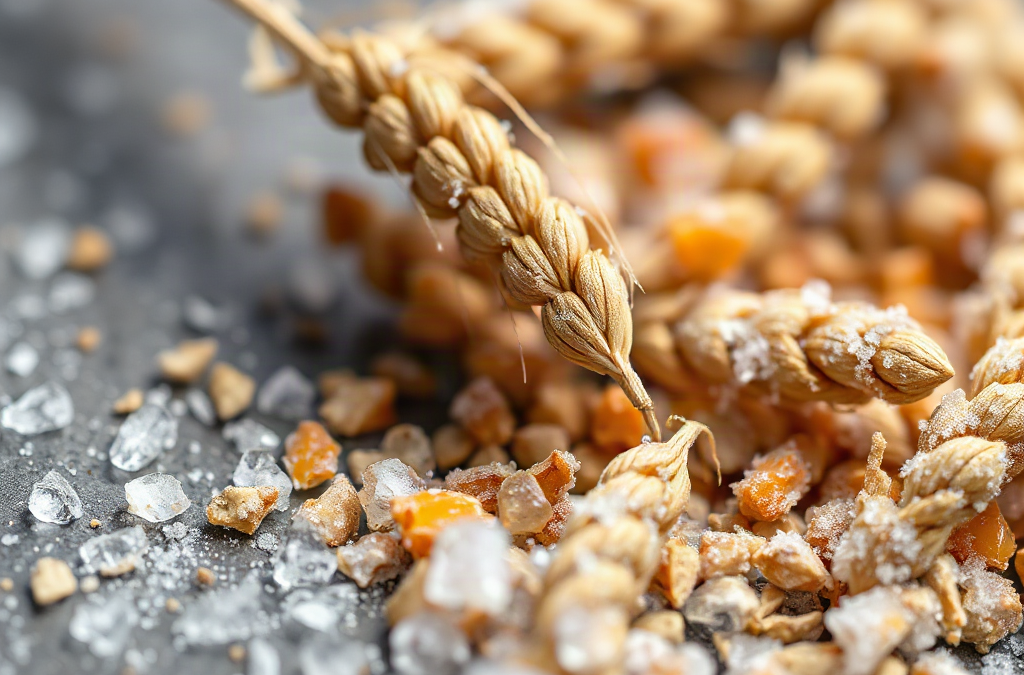
Freezing affects wheat berry texture mainly according to whether the kernels are dry or already cooked: properly packaged dry berries change very little, while frozen cooked berries may become slightly softer and less chewy. In hydrated kernels, ice crystals can disrupt cell walls and allow more starch and moisture to escape during thawing. Slow freezing, excess cooking liquid, repeated freeze-thaw cycles, and warm thawing make that change more noticeable. For the firmest results, cook the berries just to the desired tenderness, drain and cool them promptly, freeze them in shallow portions, and reheat without prolonged simmering.
Why Do Dry and Cooked Wheat Berries Freeze Differently?
Dry and cooked wheat berries respond differently to freezing because their moisture levels are radically different. An intact dry kernel contains relatively little available water, so there is limited liquid inside its tissues to expand into ice crystals. A cooked kernel has absorbed substantial water into its bran, germ, and starchy endosperm. Freezing that hydrated structure creates more opportunity for physical disruption.
Properly dried wheat berries generally retain their hard, dense character in a freezer. Freezing may be used as one part of an insect-management process for a small household supply, but cold storage does not correct grain that was damp, musty, moldy, or otherwise unsuitable before packaging. The larger quality threat appears after removal from the freezer: humid air can condense on cold kernels or inside an opened container. If those berries are sealed again while damp, the resulting moisture can harm storage quality and eventually affect flavor, milling behavior, and texture.
Cooked berries present the opposite situation. Their desirable chew comes from the bran remaining intact while the interior starch becomes hydrated and tender. Once frozen, that balance may shift slightly. The thawed grain can feel softer, release more surface starch, or lose some of the distinct bite it had immediately after cooking. The difference is often modest in soups, casseroles, grain bowls, and stuffing, but it is easier to notice in a plain chilled salad where each kernel is expected to remain separate and springy.
Variety and cooking stage matter as well. Hard wheat berries that were stopped at a firm, pleasantly chewy stage usually tolerate freezing better than berries cooked until their interiors are very soft. Pearled or mechanically altered wheat cooks faster because part of the protective outer layer has been removed; it may also become tender more readily during freezing and reheating. Labels such as hard red, hard white, soft white, or pearled therefore give useful context, but the texture at the moment of freezing remains the more practical test.
A common misconception is that freezing makes every dry kernel brittle or every cooked kernel mushy. Neither outcome is automatic. For dry grain, moisture exposure during warming is usually more consequential than the low temperature itself. For cooked grain, initial doneness, free liquid, package depth, and the number of thawing cycles determine how obvious the change becomes. Decide first whether the goal is preserving uncooked stock or saving ready-to-eat portions; the two jobs require different handling.
How Do Ice Crystals Change a Cooked Kernel?
Ice formation changes cooked wheat berries by redistributing water within and around their hydrated structure. As the temperature falls, some liquid water forms crystals. Those crystals can press against softened plant tissues, while unfrozen water becomes more concentrated in dissolved compounds. During thawing, not all of the water returns to exactly the same locations, so a small amount may appear as liquid in the container or as moisture on the kernel surface.
The bran layer gives a wheat berry more structural resistance than a soft cooked cereal has, which is why whole kernels usually remain recognizable after freezing. Inside that bran, however, cooked starch has already absorbed water and swollen. Freezing and thawing can disturb the relationship among starch, water, and the kernel’s cellular structure. The practical signs are a less resilient center, kernels that split more readily, or a slightly tackier surface after reheating.
Freezing speed can influence the size of ice crystals. A shallow container placed in a properly cold freezer generally freezes more quickly than a deep, warm container packed tightly with grain. Faster heat removal tends to limit the time available for large crystals to develop. A home freezer cannot reproduce every condition of commercial rapid freezing, but portion size remains a useful variable that the cook can control.
Consider two batches cooked from the same wheat. One batch is simmered until the berries are tender but still resist gently when bitten, drained thoroughly, spread out to cool, and frozen in thin portions. The second is cooked until very soft, stored with a pool of cooking water, and placed warm into a deep tub. The first batch is more likely to return as separate, chewy kernels. The second has already lost structural margin before it freezes, and the extra water can encourage clumping and a porridge-like surface during reheating.
Repeated freeze-thaw cycles compound the problem. Removing a large package, partially thawing it to scoop out a serving, and returning the remainder to the freezer allows ice to melt and form again. Texture becomes less predictable, and repeated warming also complicates safe temperature control. Small portions avoid both issues. A change in chewiness alone does not establish spoilage, but unexpected sour odors, visible mold, or questionable handling are reasons not to rely on reheating as a remedy.
How Should Wheat Berries Be Frozen for a Firm Texture?
Firm frozen wheat berries begin with controlled cooking rather than a special freezer container. Simmer the grain until the center is fully edible but the kernel still has the amount of resistance wanted in the finished dish. If the berries will later be added to soup or reheated in sauce, stop slightly before the texture becomes completely soft because the second cooking step will continue tenderizing them.
Drain the cooked grain well. Residual cooking liquid is useful when making a creamy cereal, but it works against separate kernels in freezer storage. After draining, spread the berries in a shallow layer so heat can escape efficiently. Cooling promptly also limits the time a dense mass of cooked grain spends warm. Do not leave a deep pot on the counter waiting for its center to cool; divide it into shallow containers instead.
Use the following sequence when texture is the priority:
- Check doneness by biting a kernel. It should be tender through the center without collapsing under light pressure.
- Remove excess surface water. Drain thoroughly and allow steam to dissipate rather than packaging a wet mass.
- Cool in a shallow layer. Smaller depth releases heat faster and discourages kernels from continuing to cook in retained heat.
- Portion for one use. Flat freezer bags or shallow rigid containers freeze faster and eliminate the need to thaw a large block repeatedly.
- Exclude unnecessary air and label the package. Close the container securely and record what it contains and when it was frozen.
- Freeze the portions flat. Leave space around newly added packages until they are solid rather than stacking several warm, thick containers together.
Individual freezing on a tray can be useful when loose kernels are needed for measured additions to bowls or soups. Spread cooled, drained berries in one layer, freeze until firm, and then transfer them to a freezer container. This extra step takes space and handling time, so it offers little advantage when an entire portion will be reheated at once. It is most useful for cooks who want to scoop out a small amount without thawing the rest.
Get Whole Wheat Flour, Grains and Milling Supplies – CLICK HERE 
Oil is sometimes mixed into grains to reduce sticking, but it does not reverse structural damage from ice. Thorough draining and shallow freezing address the underlying moisture and cooling issues more directly. Avoid adding excess oil solely as a freezer treatment, especially if the berries may later go into dishes where that flavor or coating is unwanted. The signs of a successful method are loose or easily separated kernels, little free liquid after thawing, and a center that remains pleasantly chewy. A dense frozen block surrounded by icy liquid signals that portioning, drainage, or cooling should be adjusted next time.
Thawing, Reheating, and Choosing the Right Dish
Reheating method determines whether a modest freezing change remains barely noticeable or turns into excessive softness. Frozen berries can often go directly into a hot soup, stew, or skillet dish. This avoids a long thaw and gives the cook control over how much additional liquid and heat the kernels receive. Add them late enough that they warm through without simmering for the full cooking time of the dish.
For grain bowls or side dishes, place a frozen portion in a covered pan with only a small splash of water or broth. Warm it gently, stir as needed, and stop once the kernels are hot. A microwave can accomplish the same task in short intervals; separating and stirring the grain between intervals prevents the edges from overcooking while the center remains cold. Flooding the container with water and boiling the berries again is more likely to soften the bran and wash additional starch onto the surface.
Cold wheat berry salads require more care because their appeal depends on distinct, chewy kernels. Thaw a portion in the refrigerator, drain any released water, and assess the texture before adding dressing. Watery vegetables and acidic dressing can further soften or mask the grain if the assembled salad sits for a long time. When a particularly firm salad texture is the priority, freshly cooked and chilled berries may be preferable to frozen ones. Frozen leftovers are better suited to salads with robust ingredients such as roasted vegetables, nuts, herbs, or crumbled cheese, where a small reduction in chew is less prominent.
Soups and baked dishes are more forgiving. A berry that has become somewhat softer can still add body to vegetable soup, a bean-and-grain filling, or a baked casserole. If thawed kernels release starch, that starch may even add slight thickness. A batch that is too soft for a composed salad does not necessarily need to be discarded; it can be redirected to a dish where tenderness is an advantage, provided it was handled safely and shows no spoilage concerns.
Dry frozen wheat berries need a different thawing strategy. Keep their package closed while it returns to room temperature so condensation forms on the outside of the container rather than directly on the cold grain. Open it only after the contents have warmed. Before returning any unused berries to storage, inspect for moisture and confirm that the kernels remain dry and free-flowing. Milling or cooking cold grain immediately after opening in humid air may introduce surface moisture that was not present before freezing.
The common mistake at this stage is treating thawed berries as though they still need full cooking. They usually need heating, not another prolonged simmer. Test a spoonful early. If the kernels remain separate and offer mild resistance, stop adding heat. If they are already soft, choose a soup, porridge-like breakfast, or binder for a savory filling rather than trying to restore a firm structure that freezing and overcooking have already weakened.
Frequently Asked Questions
Does freezing uncooked wheat berries make them softer?
Properly dried, securely packaged uncooked berries usually remain hard because they contain little available water for ice formation. Condensation during warming is a greater texture and storage concern than freezing itself.
Why are my thawed wheat berries mushy?
They may have been overcooked before freezing, packaged with excess liquid, frozen in a deep warm mass, or simmered too long during reheating. Drain well and freeze firmer-cooked berries in shallow portions next time.
Can cooked wheat berries be reheated from frozen?
Yes. Add them directly to a hot dish or warm them covered with a small amount of liquid. Stop heating as soon as they are hot to avoid unnecessary softening.
Should wheat berries be frozen in their cooking liquid?
Not when separate, chewy kernels are the goal. Drain them first. Keeping cooking liquid may be appropriate for a deliberately creamy preparation, but it encourages softer, more cohesive results.
Can softened frozen wheat berries still be used?
Yes, if they were handled safely and have no signs of spoilage. Redirect softer berries to soup, stuffing, casseroles, or breakfast bowls where distinct, firm kernels matter less.
Conclusion
Texture preservation depends less on freezing alone than on the condition of the berries before they enter the freezer and the way they are warmed afterward. Keep uncooked kernels dry, airtight, and sealed while they return to room temperature. For cooked berries, leave some chew at the initial cooking stage, remove free water, cool promptly, and package portions shallow enough to freeze efficiently.
Match the thawed grain to the dish rather than expecting every batch to behave like freshly cooked wheat. Firm, separate kernels work well in bowls and salads; slightly softened ones remain useful in soups, fillings, and baked dishes. On the next batch, inspect three signals—released liquid, kernel separation, and resistance at the center—then adjust drainage, portion depth, or reheating time according to what those signals show.
Get Whole Wheat Flour, Grains and Milling Supplies – CLICK HERE
Auto Amazon Links: No products found.