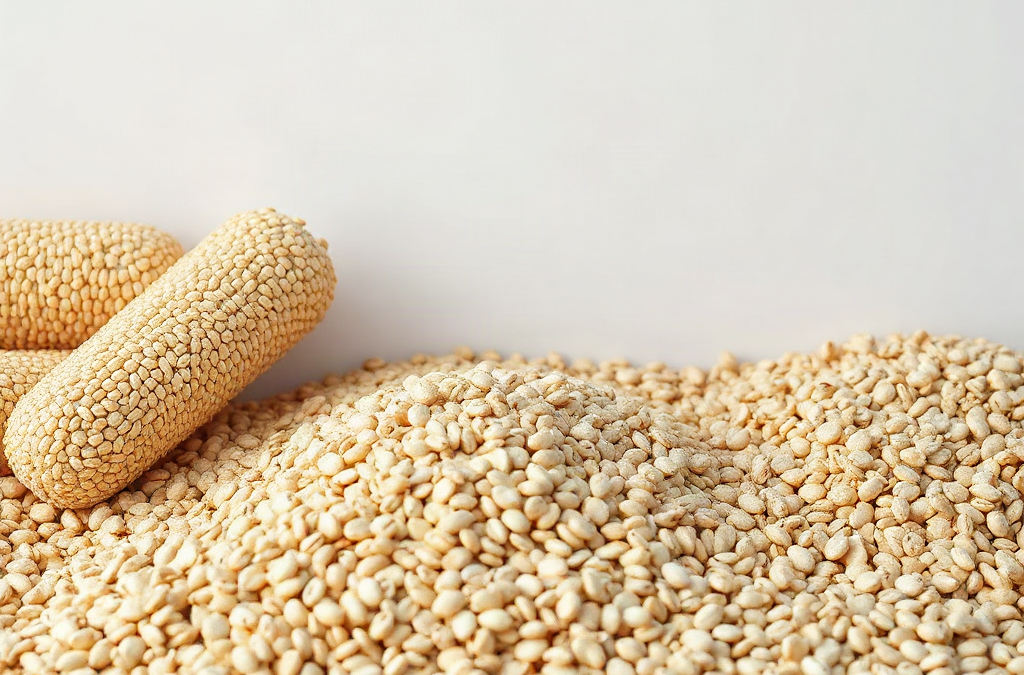
For most households, grain storage batch sizes work best when divided into 2- to 6-week working quantities rather than one large container. Estimate each grain’s weekly use, multiply by the desired reserve period, and split the total among packages small enough to lift, inspect, and rotate easily. A practical plan may combine small kitchen containers with medium sealed batches held in a cool, dry location. Package size should reflect consumption rate, container capacity, available shelf strength, and how quickly an opened batch will be used.
How Do You Calculate a Household Grain Batch?
A useful batch begins with measured consumption, not the capacity printed on a bucket or jar. Track how much rice, oats, wheat berries, cornmeal, barley, or other grain leaves the pantry during four ordinary weeks. Exclude unusual events such as holiday baking or feeding a large gathering unless those uses occur regularly. Dividing the amount used by the number of weeks produces a working weekly rate for each grain.
Multiply that weekly rate by the number of weeks you want one opened package to cover. A household using 2 pounds of rolled oats per week, for example, could choose a 4-pound two-week batch or an 8-pound four-week batch. The smaller option is opened more often but spends less time exposed to kitchen humidity and repeated handling. The larger option reduces packaging and refill work, although it becomes less convenient if consumption drops.
Calculate reserve quantity separately from package quantity. If the household wants 24 pounds of oats on hand, that does not mean 24 pounds belongs in one container. It could become six 4-pound packages, three 8-pound packages, or a combination of one working container and several sealed reserves. Separating these decisions prevents a common mistake: treating the desired total supply as the logical batch size.
| Planning Input | Calculation | Practical Use |
|---|---|---|
| Weekly consumption | Amount used divided by weeks tracked | Establishes the household’s real demand |
| Working batch | Weekly use multiplied by 2 to 6 weeks | Limits how long one package remains open |
| Total reserve | Weekly use multiplied by reserve duration | Sets the complete inventory target |
| Package count | Total reserve divided by batch amount | Estimates containers or sealed packages needed |
Volume estimates should be verified before purchasing containers because equal weights of different grains do not occupy identical space. Test the intended amount in one container without forcing the lid or overfilling it. Leave any headspace required by the chosen closure or packaging system. Labels should record the grain, package weight, and packing date so rotation does not depend on memory.
Consumption records also expose weak assumptions. A household may believe it uses wheat frequently while actually consuming far more rice, or it may count flour and intact wheat as interchangeable even though they serve different cooking routines. Plan each product independently. A reserve built around foods the household rarely prepares may look substantial on paper but rotate poorly in practice.
Match Batch Weight to Containers and Handling
Container capacity sets an upper limit, but safe, convenient handling should determine the final fill amount. A vessel that physically accommodates a large quantity may become awkward once full. Before standardizing a batch, fill one test container, carry it from the storage location to the kitchen, place it on its assigned shelf, and pour or scoop from it as it would be used.
Smaller packages are easier to lift, inspect, and distribute across shelves. They also limit the amount exposed when a seal fails or insects are found. Their disadvantages are higher packaging cost per pound, more labels, and more individual seals to check. Large containers use space efficiently and reduce packaging work, but they concentrate the consequences of moisture entry, damage, or contamination. Medium batches often provide the most workable household compromise.
Shelf capacity matters as much as personal lifting comfort. Grain is dense, and several containers grouped on one shelf can impose a substantial load. Follow the shelving manufacturer’s stated capacity where available, distribute weight across stable supports, and avoid relying on a bowed shelf simply because it has not failed yet. Keep heavy packages where they can be reached without climbing or lifting above shoulder level. A full container that cannot be moved comfortably is too large for routine household rotation, even if it fits the available space.
The package must also suit the grain’s expected storage period. A frequently opened kitchen jar serves a different function from a sealed reserve package. Clean, dry containers with intact closures help protect grain from spills, pests, and ambient moisture, but packaging cannot correct grain that was damp or compromised when stored. Examine grain before packing and do not combine a questionable remainder with a fresh batch.
A practical container check covers four points:
- Fit: The measured batch closes without crowding the seal or lid.
- Handling: A household member can move it through the actual route safely.
- Placement: The shelf remains stable and the label stays visible.
- Use: Grain can be removed without repeated spills or prolonged opening.
Do not size every grain around a single container merely to create a uniform-looking pantry. A bulky, lightly used grain may need a smaller weight per package than a dense staple consumed every day. Standardizing container footprints can improve stacking, but standardizing fill weights without considering density and use rate often produces inconvenient batches.
How Should Working and Reserve Grain Be Divided?
A two-level system separates everyday access from protected inventory. The working batch stays in the kitchen or another convenient location and is opened repeatedly. Reserve batches remain closed until needed. This arrangement reduces traffic through the main supply and makes it easier to identify which package should be used next.
For a staple eaten daily, the working container might hold several weeks of use, while reserve packages each hold one refill. Consider a household that consumes roughly 3 pounds of rice per week and prefers a four-week kitchen supply. A 12-pound working amount is reasonable only if its container is easy to handle and the rice is used consistently. The remaining reserve could be divided into 12-pound refills or smaller packages if shelf strength, lifting, or loss control favors them.
Occasional grains need a different pattern. If barley is used once or twice a month, a large opened container could remain in service for a long time. Smaller packages keep more of the supply closed while allowing the household to open only what a few recipes require. Buying in bulk does not obligate the household to store the purchase as one batch; repackaging into usage-sized units is often the more functional choice.
Batch diversity can also reduce operational risk. Rather than placing a complete supply in one oversized vessel, divide it across more than one sound container and, where practical, more than one stable storage position. A leak, cracked lid, spill, or localized pest problem is then less likely to affect the entire reserve. This is loss containment, not a substitute for inspecting the storage area and correcting the source of damage.
Get Whole Wheat Flour, Grains and Milling Supplies – CLICK HERE 
Rotation should follow clear dates and package order. Place older suitable batches where they can be selected first, and avoid continually topping up an everyday container with new grain. Topping off can leave older kernels at the bottom and erase the connection between the contents and their packing date. Empty the working vessel, inspect and clean it as appropriate, let it dry fully, and then refill it from the next reserve package.
The system is working when sealed reserves remain undisturbed, the kitchen amount is used within its planned interval, and packages move forward in a visible sequence. Warning signs include several partially opened containers, labels hidden at the back of a shelf, grain repeatedly transferred without dates, or a working package that takes months to finish. Those patterns call for smaller batches or a simpler inventory.
How Can You Test and Adjust the Batch Plan?
A batch plan should be tested through one normal rotation cycle before it is expanded. Begin with the grain used most predictably, prepare one working amount and two or three reserve packages, and record when the working container is filled and emptied. The result reveals whether the assumed consumption rate matches household behavior.
If a four-week batch lasts eight weeks, reducing the next package will keep less grain open at one time. If it is exhausted in ten days, either increase the working amount or refill it more frequently. The better choice depends on available space and handling. A small apartment may favor compact packages and more frequent refills, while a household with sturdy shelving and steady use may accept larger units. Convenience should not override the ability to inspect and move every package.
Review the physical setup during the trial. Look for lids that are difficult to close, containers that scrape neighboring packages, shelves that flex, labels that cannot be read, and grain spilled during transfer. Check the storage location for dampness, condensation, pest activity, or temperature swings. Changing package size will not solve a poor environment, so correct location and container problems before increasing the reserve.
Use the following order when revising the plan:
- Confirm the household’s recent weekly use for each grain.
- Choose how long one opened batch should remain in service.
- Test the filled package for lifting, pouring, and shelf fit.
- Divide the reserve so one package problem cannot affect everything.
- Date each unit and review the plan after a complete refill cycle.
Seasonal cooking can justify more than one target. A household may use oats steadily year-round but consume extra flour during a baking season. Maintain a normal batch based on routine use and add a clearly dated seasonal amount only when the pattern is predictable. Do not permanently enlarge every package to accommodate a short annual peak.
Recalculate after meaningful changes rather than continually improvising. A person joining or leaving the household, a dietary shift, new milling habits, or reduced shelf space can alter the appropriate batch. Success is visible when packages are finished in the expected window, reserves remain clearly labeled, inspection is straightforward, and no container is too heavy or inconvenient to rotate. Persistent leftovers, missing dates, and multiple open packages show that the plan needs simplification.
Frequently Asked Questions
What is a practical grain batch size for one household?
A practical batch is usually the amount the household uses within 2 to 6 weeks after opening. The correct weight varies by grain and family, so calculate it from actual weekly consumption rather than relying on a universal container size.
Should all stored grain be divided into equal batches?
No. Frequently used grains can justify larger working batches, while occasional-use grains are better kept in smaller packages. Equal batches simplify stacking, but usage-based batches usually reduce the time grain remains open.
How do I calculate the number of grain containers I need?
Divide the total amount you intend to store by the usable amount each container can hold. Round up, allow headspace where the packaging method requires it, and reserve one smaller container for everyday use.
Is one large grain container cheaper than several small ones?
It may cost less per unit of capacity, but it concentrates risk and can be difficult to move or rotate. Several medium packages generally offer a better balance between packaging cost, handling, and protection from a single-container failure.
When should household batch sizes be adjusted?
Recalculate them when household size, eating habits, reserve goals, or storage space changes. Frequent leftovers in an open container suggest the batch is too large; repeated shortages before the next planned opening suggest it is too small.
Conclusion
Build the household plan from observed use, then make container size serve that plan rather than dictate it. Record several weeks of consumption for each grain, choose a realistic interval for an opened package, and verify that the filled container can be moved, placed, and emptied comfortably. Keep everyday grain separate from dated reserve units, with older suitable packages positioned to move forward first.
Start with one frequently used staple and test a complete refill cycle before repackaging the entire supply. Adjust downward when grain remains open too long or containers are difficult to handle; adjust upward only when use is steady and storage conditions support it. Clear labels, manageable weights, sound shelving, and limited exposure matter more than visual uniformity. A workable batch system should make every package easy to identify, inspect, rotate, and use.
Get Whole Wheat Flour, Grains and Milling Supplies – CLICK HERE
Auto Amazon Links: No products found.