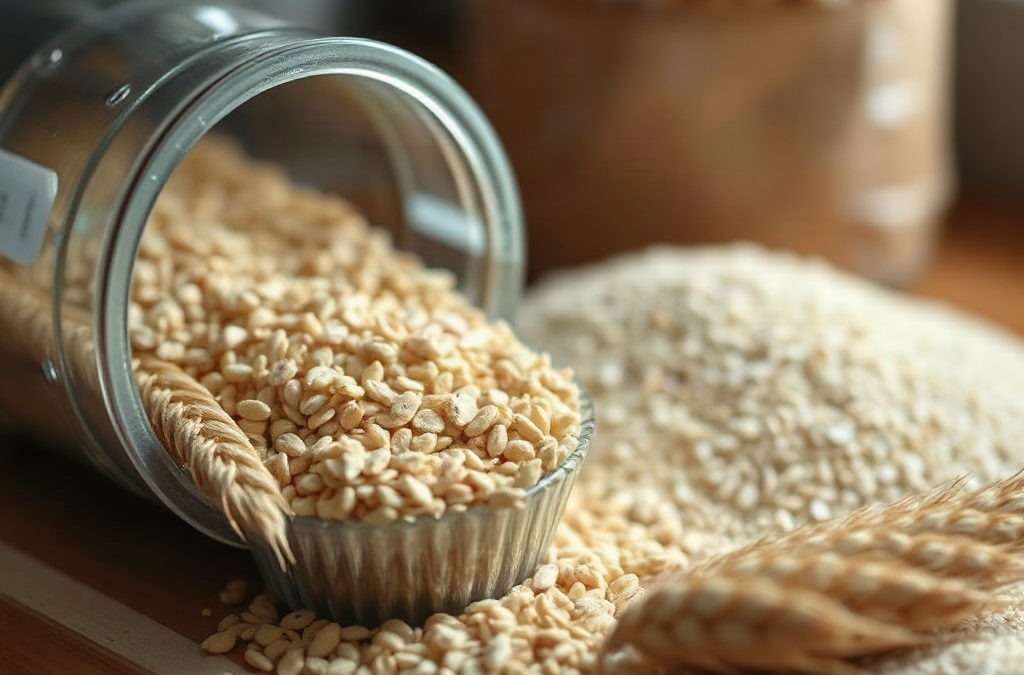
Yes, milling reduces whole wheat shelf life because grinding breaks the protective kernel, exposes germ oils to oxygen, and creates more surface area for oxidation, moisture absorption, and odor pickup. Intact wheat berries can remain usable far longer than whole wheat flour under comparable conditions. For the best flavor, mill only what you expect to use soon, keep the flour airtight and cool, and refrigerate or freeze surplus flour. Discard it if it develops a stale, bitter, paint-like, soapy, or distinctly rancid odor rather than relying on appearance alone.
Why Grinding Shortens Freshness
A wheat kernel is naturally arranged to protect the parts that are most vulnerable to deterioration. Its outer bran layers limit exposure, while the germ and endosperm remain enclosed until the kernel is cracked or ground. Milling disrupts that structure and distributes bran, germ, and endosperm throughout the flour. The resulting particles present far more surface area to the surrounding air than an intact berry does.
The germ contains oils that contribute flavor and nutritional value, but those oils can oxidize after grinding. Oxygen initiates chemical changes that gradually produce stale or rancid aromas and flavors. Heat and light can accelerate the process, and a loosely closed paper bag offers much less protection than a well-sealed container. This is why whole wheat flour generally changes sooner than intact wheat even when both began with sound, dry kernels.
Milling also changes how the grain interacts with moisture and nearby odors. Fine flour can absorb humidity from the air, especially when a warm container is opened in a humid kitchen. It can also acquire odors from onions, spices, cleaning products, or a freezer that contains poorly wrapped food. Moisture does not merely affect baking performance; enough moisture can encourage clumping, insects, or mold. Flour with visible mold, unexplained dampness, or insect activity should not be treated as merely stale.
The common misconception is that milling immediately makes flour unsafe. The usual early loss is sensory quality rather than sudden spoilage: aroma becomes muted, baked goods taste flat, or bitterness appears. Safety concerns become more pressing when moisture, pests, mold, or contaminated handling enters the picture. A clean mill and dry grain help, but they do not stop oxidation once the kernel has been opened.
Flour texture matters as well, though it does not reverse the basic outcome. Coarsely cracked wheat may expose less total surface than finely milled flour, but both lose the kernel’s intact barrier. Anyone comparing Does milling reduce whole wheat shelf life across milling styles should focus first on germ-oil exposure, temperature, air, and intended holding time rather than assuming a coarse grind is suitable for long-term pantry storage.
Wheat Berries Versus Freshly Milled Flour
Intact wheat berries are the better form for preserving quality over an extended period, while flour is the convenient form for immediate cooking and baking. A berry stores its vulnerable components inside the kernel and occupies less space than an equivalent quantity of loosely packed flour. It is also easier to inspect for insects, moisture damage, unusual discoloration, and broken kernels before milling.
Freshly milled flour offers a different advantage: the cook controls the grain and grinds only the amount required. Consider a household that bakes two loaves each week. Keeping most of its supply as berries and milling a small batch before mixing dough limits the amount of exposed flour sitting between baking days. Milling an entire bucket at once saves setup time, but it transfers the whole supply into its less stable form and demands more airtight, cold-storage capacity.
That tradeoff affects purchasing decisions. A person without a mill may reasonably buy whole wheat flour in modest packages and rotate it frequently. Someone with reliable milling equipment can retain berries and produce flour as needed. Neither method guarantees freshness: old or poorly stored berries will not become good flour, while newly purchased flour can deteriorate if left beside a warm oven in an unsealed bag.
Extraction also matters. True whole wheat flour includes the bran and germ, so it retains the oil-bearing fraction. Refined white flour has much of the bran and germ removed and often keeps its neutral flavor longer, but it is not nutritionally or functionally identical. Replacing whole wheat with white flour solely for shelf life changes fiber content, flavor, water absorption, dough handling, and the finished food. Sifting home-milled flour may remove some coarse material, yet it does not provide a controlled equivalent to commercially refined flour or guarantee a predictable storage life.
The most useful choice follows the expected use interval. Keep reserve quantities as clean, dry berries when long holding time is the priority. Store only a working amount as flour when speed matters. If a recipe needs a blend, mill the whole-grain portion close to use and combine it with other flours during mixing rather than storing a large premixed batch. That approach preserves flexibility and reduces the chance that one aging ingredient compromises the entire blend.
How Packaging and Temperature Change the Timeline
Cold, airtight, dark storage slows quality loss after milling, but no package restores the protection of an intact kernel. The first priority is limiting repeated exposure to warm air and humidity. A rigid container with a sound gasket or a well-sealed food-safe bag protects flour better than a folded retail sack. The container should be clean, fully dry, and appropriately sized so that it does not hold a large volume of unnecessary air.
Room-temperature storage is practical for flour that will be used promptly in a cool, dry kitchen. The worst location is often a cabinet above a stove, dishwasher, refrigerator exhaust, or other heat source. Repeated warming accelerates oxidation and can create temperature differences that encourage condensation. Moving the same container between a cold room and a warm, humid room can cause similar trouble if it is opened before its contents reach room temperature.
Refrigeration is useful when whole wheat flour will remain on hand beyond a short working period. Freezing is a stronger choice for surplus flour, seasonal baking supplies, or a large batch produced for convenience. Divide flour before chilling it so the main supply is not repeatedly opened. A small container can stay in active use while sealed portions remain cold. Label each portion with the grain type and milling date; otherwise, unidentified bags tend to outlast the owner’s memory of their condition.
When removing frozen flour, keep the package closed while it warms. Opening a cold bag immediately allows humid room air to contact the flour and may deposit moisture on the particles. Once the sealed package reaches room temperature, open it, inspect it, and measure what is needed. Return unused flour only if it remained dry and clean; repeated thaw-and-refreeze cycles are less desirable than storing smaller portions.
Get Whole Wheat Flour, Grains and Milling Supplies – CLICK HERE 
Vacuum sealing can reduce available oxygen, but it is not a remedy for warm storage, damp flour, or weak seals. Oxygen absorbers likewise require suitable packaging and dry food, and they should not be treated as a substitute for sanitation or temperature control. For most home users researching Does milling reduce whole wheat shelf life, portion size and cold storage provide more practical control than elaborate packaging that is opened every few days.
A Practical Mill, Store, and Inspect Routine
A reliable routine starts before the grain enters the mill. Examine berries for insects, webbing, dampness, musty odor, and foreign material. The mill should be clean, dry, and suitable for the grain being processed. Residual flour trapped in a machine can become stale and introduce an off odor into a fresh batch, so follow the manufacturer’s cleaning instructions rather than washing components that are not designed to get wet.
Estimate the amount required from the recipe and the next few planned uses. Milling a modest surplus is reasonable when the mill is inconvenient to assemble, but the convenience disappears if half the batch sits forgotten. Catch the flour in a clean container, allow any milling heat to dissipate in a protected dry setting, and package it promptly. Do not seal visibly warm flour in a way that traps condensation, but do not leave it exposed for hours while it cools.
Use a compact control sequence:
- Inspect: Check grain and equipment for moisture, pests, residue, and abnormal odor.
- Mill: Grind the quantity tied to a realistic baking or cooking plan.
- Portion: Separate near-term flour from refrigerator or freezer portions.
- Label: Record the grain and milling date on every sealed package.
- Recheck: Smell and visually inspect flour before adding other ingredients.
Fresh whole wheat flour should smell characteristic of the grain, often mild, nutty, or slightly sweet, without a sharp chemical edge. Deteriorating flour may smell like old nuts, crayons, paint, putty, soap, or bitter oil. Odor descriptions are imperfect, so comparison helps: smell a newly milled spoonful beside the stored batch. Do not taste flour raw as a safety test. Flour is a raw agricultural product, and tasting it cannot rule out microbial contamination.
Discard flour with mold, moisture damage, persistent rancid odor, pest contamination, or uncertainty about a serious storage failure. Baking does not restore oxidized oils or remove their unpleasant flavor. Slightly aged flour without spoilage signs may still perform acceptably, but weak aroma and flat flavor signal that rotation should improve. The practical response is to mill smaller batches, lower the storage temperature, or divide packages more effectively—not to mask deterioration with stronger ingredients.
A dated inventory reveals whether the routine is working. Flour should be used in order, packages should remain dry and odor-free, and the amount discarded should decline. If older portions repeatedly accumulate, reduce each milling batch. That adjustment is more dependable than trying to assign one universal expiration date to every grain, mill, climate, and container.
Frequently Asked Questions
How quickly should freshly milled whole wheat flour be used?
Use it as soon as practical for its freshest flavor. If it will not be used promptly, seal it in portions and refrigerate or freeze it rather than leaving a large batch in a warm pantry.
Does freezing whole wheat flour damage it?
Freezing is generally a practical way to slow quality loss. Protect the flour from odors and moisture, and let the closed package warm before opening to reduce condensation.
Can rancid whole wheat flour still be used for baking?
It should be discarded. Baking cannot reverse oxidized oils, and the bitter or stale character may remain in the finished food.
Does coarse milling preserve flour longer than fine milling?
A coarse product may expose less surface area than very fine flour, but cracking still breaches the kernel. It should not be assumed to retain the keeping quality of intact wheat berries.
Should whole wheat flour be stored in its original paper bag?
The paper bag is suitable for short turnover in good conditions, but it offers limited protection from air, humidity, pests, and odors. Place the flour in a clean airtight container for stronger protection.
Conclusion
Milling shifts wheat from a naturally protected seed into a more exposed ingredient, so the storage plan should change at the same time. Preserve reserve supplies as sound, dry berries when possible, then grind amounts connected to actual meals or baking. Package surplus flour in small airtight portions, keep it away from heat and humidity, and use refrigeration or freezing when turnover will be slow.
Dates are useful for rotation, but condition matters more than a calendar alone. Check for off odors, dampness, pests, mold, and damaged packaging before flour enters a recipe. If batches repeatedly become stale, change the batch size or storage location rather than relying on additional packaging gadgets. A simple cycle of inspect, mill, portion, label, and recheck protects flavor while keeping waste manageable.
Get Whole Wheat Flour, Grains and Milling Supplies – CLICK HERE
Auto Amazon Links: No products found.