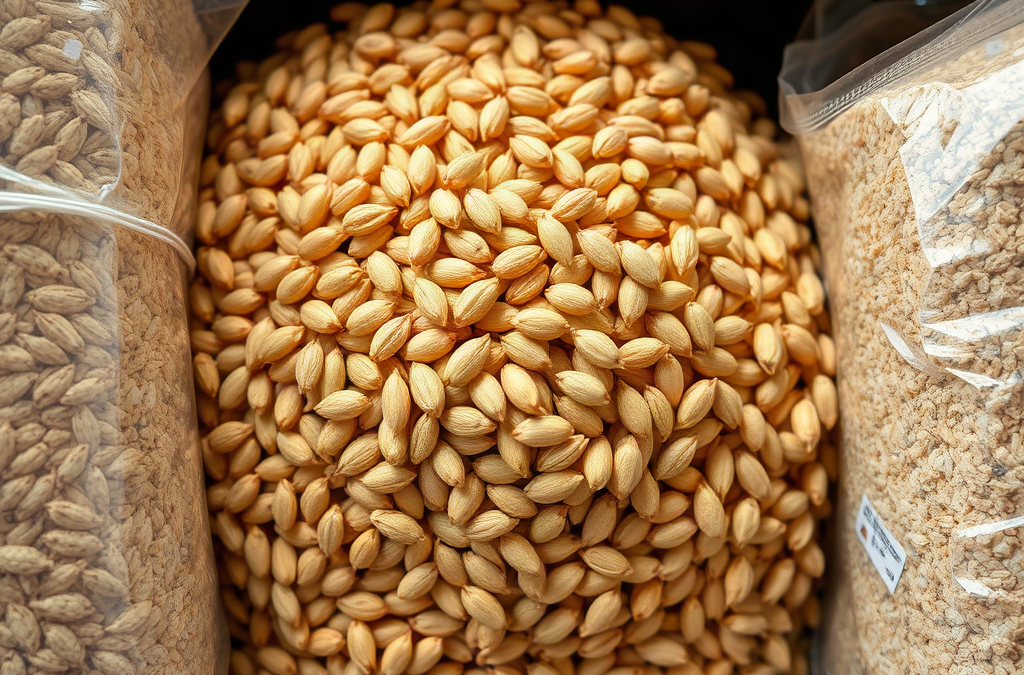
Whole wheat kernels can remain usable for several years—and potentially much longer in carefully controlled long-term storage—while whole-wheat flour usually keeps its best quality for only a few months because grinding exposes its oils to oxygen. Shelf life is governed by grain moisture, temperature, packaging, insects, and repeated exposure to humid air. Intact kernels sealed in oxygen-barrier containers with oxygen absorbers generally outlast grain kept in paper sacks or frequently opened buckets. Before using stored wheat, inspect it for insects, damp clumps, mold, musty or rancid odors, and unusual discoloration rather than relying on the packing date alone.
Expected Shelf Life of Wheat Kernels and Flour
Intact wheat berries and whole-wheat flour age at very different rates. A kernel’s bran forms a protective outer layer around the germ and endosperm, limiting the oil’s contact with air. Milling breaks that structure apart. Once the germ oil is distributed throughout flour, oxygen can reach far more surface area, so stale or rancid flavors develop much sooner.
Whole wheat berries kept in ordinary pantry packaging are best treated as a rotating food supply rather than an indefinite reserve. Under cool, dry, pest-free conditions, they can retain acceptable cooking and milling quality for several years. Purpose-built long-term packaging may extend that period substantially, but no calendar estimate overrides the actual condition of the grain. Heat, residual moisture, damaged seals, and insect activity can turn a theoretically long shelf life into a short one.
Whole-wheat flour has a narrower quality window. In a cabinet, its fresh flavor is commonly measured in months rather than years. Refrigeration slows oxidation, while freezing is more suitable when flour will not be used promptly. Cold storage does not restore flour that has already become rancid, and the container must protect it from condensation and odors. Let a sealed package approach room temperature before opening it so humid room air does not condense on cold flour.
The intended use changes the practical deadline. Wheat reserved for milling into bread needs good flavor, sound kernels, and dependable milling performance. Grain intended for sprouting has a stricter requirement because viability can decline even when the kernels remain edible. Seed wheat must meet planting expectations as well as food-quality standards. A bucket that produces acceptable cooked wheat may therefore be unsuitable for sprouts or planting.
A useful distinction is safe, edible, and high quality. These are not identical. Dry grain may lose flavor or germination strength without showing obvious spoilage, while damp or moldy grain can be unacceptable regardless of age. Anyone asking How long does whole wheat last in storage should first identify whether the product is intact berries, cracked wheat, or flour and whether the goal is routine cooking, milling, sprouting, or seed.
Conditions That Shorten Wheat’s Usable Life
Moisture and heat are the two environmental pressures that deserve attention first. Warm conditions accelerate chemical deterioration, including oxidation of the natural oils in the germ. Moisture raises the risk of caking, microbial growth, and concealed spoilage. A fluctuating garage or shed may look dry while still exposing containers to hot summers, cold surfaces, and condensation.
Packaging cannot correct wheat that entered storage too damp. Sealing questionable grain in an airtight container may trap the problem rather than solve it. Wheat should be clean, mature, and appropriately dry before long-term packing. Home users rarely have laboratory measurements, so the safest approach is to buy food-grade dry wheat from a dependable supplier and keep it protected during transfer. Grain exposed to rain, a wet basement, or unexplained dampness should not be packed for extended storage on assumption alone.
Oxygen affects both quality and pests. It supports oxidation and allows many stored-product insects to continue developing. Oxygen absorbers in a genuinely low-permeability package can reduce those pressures, but they are not preservatives that make wet grain safe. They also perform poorly when the package leaks or when an absorber has been left exposed before sealing.
Light is less important than moisture and temperature for intact wheat, yet opaque storage protects quality and makes temperature control easier. Odors also matter because grain can absorb smells from fuel, paint, cleaning products, onions, or other strongly scented materials. Food containers should never share a confined storage area with gasoline, pesticides, or household chemicals.
Consider two identical lots. One is placed in a sealed food-grade system in an interior closet with stable temperatures. The other sits in its original sack on a concrete garage floor. The second lot faces pests, humidity movement, physical damage, and temperature swings, even if both packages bear the same date. The common mistake is assigning both the same expiration based only on age.
Check the storage site seasonally rather than assuming it remains suitable. Look for wall condensation, plumbing leaks, rodent evidence, insect webbing, bulging lids, and containers softened or cracked by age. Elevate supplies above the floor and leave enough access to examine the rear and underside. Stable conditions and visible packaging provide more decision value than an optimistic shelf-life label.
Packaging for Pantry and Long-Term Storage
Packaging should match how soon the wheat will be consumed and how often it must be opened. For routine use, a clean food-grade container with a tight lid protects berries from pantry insects and spills. It does not necessarily create a low-oxygen environment, especially when opened every week. That is acceptable for a working supply that is rotated regularly.
For longer holding periods, wheat berries are commonly divided into smaller oxygen-barrier bags, paired with appropriately sized oxygen absorbers, sealed, and protected inside rigid food-grade buckets. The barrier bag limits oxygen and moisture transmission; the bucket guards against punctures and handling damage. A bucket alone is durable but may not offer the same gas barrier as a properly sealed inner liner. Packaging flour this way does not give it the same longevity as intact kernels because the flour’s oils are already exposed by milling.
A practical packing sequence is short enough to verify each time:
- Examine the wheat. Reject grain with dampness, active insects, webbing, mold, or an abnormal odor.
- Use clean, dry materials. Confirm that bags, lids, and buckets are intended for food contact and have no residual smells.
- Divide the supply. Smaller units limit the amount exposed whenever one package is opened.
- Seal and label promptly. Record the product, packing date, and any relevant lot information.
- Place it in a cool, dry location. Keep packages off bare floors and away from chemicals, sunlight, and heat-producing equipment.
Package size creates a real tradeoff. One large liner costs less and takes less work, but opening it exposes the entire quantity to fresh oxygen and humid air. Several smaller liners require more materials but isolate seal failures and simplify rotation. A household that mills five pounds at a time gains little from repeatedly opening a large reserve bucket.
Get Whole Wheat Flour, Grains and Milling Supplies – CLICK HERE 
Do not combine newly purchased grain with an older lot before inspection. Mixing can spread insects and removes the ability to trace an off odor or packaging problem to one batch. Keep lots separate and use the oldest acceptable package first. Marking an “opened” date is especially useful for working containers.
Freezing can be convenient for whole-wheat flour and modest quantities of kernels, provided the package is moisture-resistant and has enough protection from freezer odors. It becomes less practical for a large emergency reserve because it consumes space and makes shelf life dependent on uninterrupted power. For readers comparing options under How long does whole wheat last in storage, intact grain in sound dry packaging offers the most flexible long-duration approach, while refrigerated or frozen flour suits near-term convenience.
How to Inspect Stored Wheat Before Using It
Inspection begins before the package is opened. Check for punctures, failed seams, loose lids, rodent gnawing, water staining, and signs that the container was exposed to flooding or chemicals. A package that has lost its seal deserves closer evaluation; it should not automatically be returned to long-term storage with a new lid.
After opening, use sight and smell before tasting or cooking. Sound wheat berries should generally be dry, firm, and characteristic of their variety. Investigate live insects, larvae, webbing, damp clumps, visible mold, or unusual darkening. A musty odor can indicate moisture damage, while a paint-like, bitter, soapy, or otherwise rancid smell points to deteriorated oils. Do not try to rescue moldy or chemically contaminated wheat by washing, baking, or milling it.
Insect presence requires judgment about the extent and the storage system. A few pantry insects are different from moisture spoilage, but an infestation still signals failed protection and can spread to nearby foods. Isolate the package, inspect adjacent grain, and clean shelves and crevices. Discarding may be the sensible option when the source is uncertain, the infestation is heavy, or the grain shows any moisture-related warning sign.
If the grain passes the initial check, test a small amount before committing a full batch. Cook a sample or mill enough for a small recipe. Note aroma, flavor, texture, and whether the kernels hydrate normally. For sprouting, perform a small germination test rather than assuming edible wheat remains viable. Poor sprouting does not automatically make grain unsafe to eat, but it changes what the lot can reliably do.
Dates remain useful for rotation and tracing, not as substitutes for inspection. A young package can fail after a leak, while older wheat held under stable dry conditions may remain satisfactory. Keep a brief record of the date opened, condition observed, and intended use. If multiple packages from one lot show the same odor or discoloration, stop using that lot rather than treating each failure as isolated.
Uncertainty should lower the threshold for disposal, particularly after flooding, chemical exposure, visible mold, or unexplained dampness. Cooking is not a universal correction for contaminated grain. When a package appears normal but quality is merely uncertain, a small cooking test provides practical information. When contamination is plausible, tasting is the wrong test. That distinction is the safest way to apply any estimate for How long does whole wheat last in storage.
Frequently Asked Questions
Does Whole Wheat Last 30 Years?
Properly dried wheat berries in intact oxygen-barrier packaging may remain usable for very long periods, but a fixed 30-year promise ignores temperature, moisture, seal integrity, and initial grain quality. Inspect and test each package.
Does Whole-Wheat Flour Last as Long as Wheat Berries?
No. Milling exposes the germ oils to oxygen, so whole-wheat flour develops stale or rancid flavors much sooner. Store berries for longevity and mill smaller amounts as needed.
Should Wheat Berries Be Refrigerated?
Refrigeration is optional for dry berries kept in sound packaging. It can slow quality loss, but condensation becomes a concern if a cold container is opened before warming while sealed.
Can Stored Wheat Be Used After Its Best-By Date?
A best-by date mainly addresses expected quality. Check the package, smell the grain, look for moisture or pests, and test a small amount; discard it if contamination or spoilage is suspected.
Are Oxygen Absorbers Necessary for Wheat Storage?
They are useful for long-term storage in properly sealed oxygen-barrier packaging. They are less relevant for a frequently opened working container and cannot make damp or contaminated wheat safe.
Conclusion
Plan wheat storage around product form and actual conditions, not a single promised date. Keep intact berries for the longest horizon, retain only a manageable supply of flour, and protect both from heat, humidity, pests, odors, and damaged packaging. Divide reserves into portions that match normal use so opening one package does not expose everything.
Label every lot, inspect the storage area through seasonal changes, and examine each package before cooking or milling. A small test batch is appropriate when quality is uncertain but the grain otherwise appears sound. Visible mold, dampness, chemical exposure, or a clearly abnormal odor calls for disposal rather than experimentation. Those habits provide a more dependable reserve than relying on age alone.
Get Whole Wheat Flour, Grains and Milling Supplies – CLICK HERE
Auto Amazon Links: No products found.