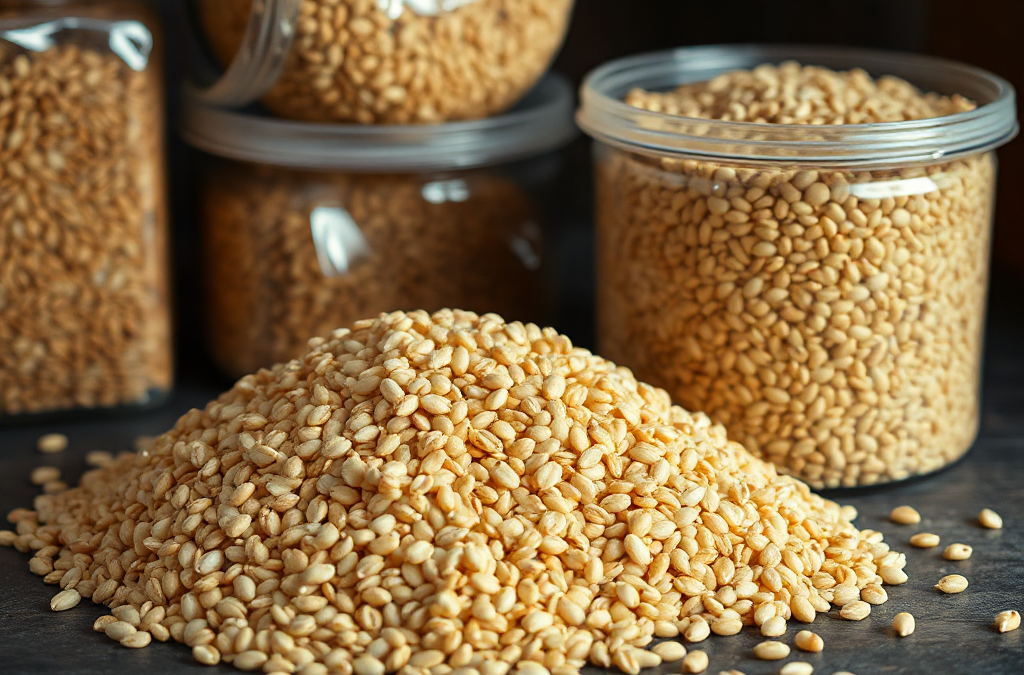
Select grains by matching their form, moisture sensitivity, packaging, and expected storage period to the space and equipment you actually have. Whole wheat, brown rice, and other higher-oil grains generally need cooler conditions and closer rotation, while polished rice, dry corn, oats, and certain wheat varieties may suit longer storage when clean, dry, sealed, and protected from heat and pests. Check whether your containers are airtight, whether temperatures fluctuate, how much room is available, and whether you can inspect stock regularly. Avoid buying a grain simply because it stores well in theory; a product that requires milling, refrigeration, or frequent monitoring may be a poor fit for a small household system.
Match Grain Form to Your Storage Environment
The best grain for storage is the one that fits the temperature, humidity control, container quality, and inspection routine available in your home. A dry basement with sealed food-grade containers offers different possibilities from a warm pantry, garage, or cabinet beside an oven. Grain selection should begin with those conditions rather than with a preferred variety or bulk discount.
Whole grains retain the bran, germ, and natural oils that give them nutritional and culinary value, but those components can also make them more vulnerable to rancidity over time. Whole wheat berries, brown rice, and whole-grain corn therefore deserve cooler storage and more deliberate rotation than refined rice or highly processed cereal products. The issue is not that whole grains are unsuitable; it is that their quality can decline sooner when heat and oxygen are poorly controlled.
Moisture is another decisive constraint. Grain that feels dry at purchase can still deteriorate if condensation forms inside a container exposed to large temperature swings. Damp conditions encourage mold growth and insect activity, while repeated opening allows humid air and odors into the package. A cool, consistently dry location is usually more valuable than an oversized container placed in an unstable shed.
Before choosing a product, inspect the storage area for leaks, condensation, sunlight, pests, and seasonal temperature changes. If the area is warm or difficult to monitor, favor smaller quantities of grains that you already use regularly. A modest supply that is consumed and replaced on schedule is safer than a large reserve that sits forgotten. Readers comparing options can also use this storage-capability selection process when evaluating individual foods.
Compare Shelf Life, Packaging, and Rotation Needs
Storage life depends on the grain, its processing, its moisture condition, the package, and the surrounding environment. “Long-term grain” is not a single category with one predictable lifespan. A clean, dry grain in an oxygen-limited container may retain quality longer than the same grain in a thin bag opened repeatedly, but packaging cannot correct poor sanitation or excessive heat.
Refined white rice is often easier to manage for extended household storage because milling removes much of the oil-rich germ. Brown rice has a different storage profile and is generally better treated as a product for cooler storage and faster rotation. Oat groats, rolled oats, wheat berries, popcorn, dry corn, barley, and buckwheat also differ in oil content, surface area, and intended preparation. Rolled oats expose more surface area to air than intact groats, while wheat berries require equipment capable of turning them into flour or cooked grain.
Packaging should match the planned duration. For routine pantry use, a tightly closed container with a clear label may be enough if the room remains cool and the stock turns over quickly. For a larger reserve, use clean, food-safe containers that limit air exchange and protect against insects. Date each package, identify the grain and form, and record whether it is whole, cracked, rolled, or milled.
A common mistake is to treat vacuum sealing or oxygen absorbers as a substitute for sound storage practice. These tools may be useful in an appropriate package, but they do not make damp grain safe, remove contamination, or eliminate the need for inspection. Do not combine newly purchased stock with older grain until the older supply has been checked. Rotate using the oldest sound package first, and discard grain showing mold, insect infestation, unusual moisture, or a persistent rancid smell rather than attempting to rescue it.
- Short rotation: choose grains your household eats weekly and store them in accessible containers.
- Moderate reserve: use sealed packaging, clear dates, and a scheduled inspection.
- Extended storage: prioritize stable environmental conditions, appropriate containers, and a realistic plan for cooking or milling.
Choose Grains for Space, Equipment, and Meal Use
Available space changes the sensible balance between variety and quantity. A narrow apartment pantry may favor compact, versatile grains such as rice, oats, or wheat berries in manageable containers. A larger storage room can support several grain types, but only if shelves permit air circulation, labels remain visible, and containers can be moved without injury or spillage.
Equipment matters just as much as capacity. Wheat berries may be economical and durable, yet they are a poor selection for a household without a mill or a dependable way to cook them. Whole corn may require different grinding or cooking methods from rolled oats. Rice and oats are more convenient when meals must be prepared with limited time, while barley or cracked grains may suit soups and porridges but not every baking plan.
Consider water, fuel, cookware, and preparation time. A grain that needs lengthy simmering may be less practical during a fuel shortage than one that cooks quickly or can be soaked in advance. Instant or heavily processed products may save fuel and labor, but they often provide less storage flexibility and may occupy more packaging volume per serving. The lowest purchase price is not the lowest total cost if the grain requires equipment you do not own or goes unused.
Imagine two households. The first has a cool closet, a small pressure cooker, and limited shelf space. It may sensibly emphasize rice, oats, and a smaller quantity of wheat berries. The second has a cool room, shelving, a grain mill, and regular bread-making habits. It can justify more wheat berries and perhaps dry corn, provided those foods are part of normal meals. Neither household needs the same inventory.
Use the grain storage decision criteria alongside actual menus. Select two or three foundational grains, then add variety only when the container, preparation method, and rotation schedule are already workable.
Build and Review a Grain Storage Selection Plan
A reliable selection plan starts with an inventory of constraints and ends with a small trial purchase. Write down the storage location, approximate temperature pattern, container sizes, available cooking or milling equipment, household consumption, and inspection frequency. This prevents a common failure: purchasing a grain for its theoretical shelf life without confirming that it fits daily use.
Evaluate each candidate against four questions: Can it remain dry in the chosen location? Can it be sealed and labeled properly? Can the household prepare it with current equipment and fuel? Will it be consumed before quality declines? A “no” answer does not automatically rule out the grain, but it identifies a modification needed before buying in bulk.
Get Whole Wheat Flour, Grains and Milling Supplies – CLICK HERE 
Test one container before expanding the supply. Prepare the grain in a familiar meal, check whether the texture is acceptable, and observe how easily the package can be opened, resealed, lifted, and inspected. If a container is too heavy to handle safely, divide it into smaller units. If the grain is unpopular, replace it with a form that serves the same meal purpose and rotates more naturally.
Review the system at least seasonally and after any change in the room. Look for clumping, condensation, damaged seals, insect evidence, off odors, and labels that no longer match the contents. A working system shows orderly dates, clean containers, regular use, and no unexplained losses. A failing system usually reveals itself through forgotten packages, repeated repacking, or grain that is technically stored but rarely prepared.
Keep a compact priority list near the inventory:
- Correct leaks, heat exposure, and pest access before increasing quantity.
- Buy the form of grain your equipment can prepare.
- Use containers sized for safe handling and realistic rotation.
- Label purchase or packing dates and inspect older stock first.
- Expand variety only after the basic supply performs well.
For more planning context, review the grain-storage selection checklist before committing to bulk purchases. Storage capability is not merely a container measurement; it includes the habits and tools that keep food usable.
Frequently Asked Questions
Which grains are easiest for a small pantry?
Rice and oats are often practical because they fit common meals, need little specialized equipment, and can be stored in compact sealed containers. Choose quantities that your household can rotate.
Are whole grains suitable for long-term storage?
They can be, but whole wheat, brown rice, and similar products generally need cooler conditions and closer rotation because their natural oils may lose quality faster than refined grains.
Does an airtight container make any grain last indefinitely?
No. Airtight packaging can limit air, moisture, and pests when used correctly, but heat, damp grain, poor sanitation, and age can still reduce quality.
Should grain be stored in one large container?
Not necessarily. Several smaller containers are easier to lift, inspect, rotate, and protect if one package develops a problem.
What should be checked before buying grain in bulk?
Confirm the storage temperature, humidity control, container type, preparation equipment, household demand, and rotation schedule. A bulk purchase is sensible only when all six fit your actual setup.
Conclusion
Choose grains by starting with the storage environment and working outward to packaging, equipment, meal use, and rotation. Cooler, drier, more stable spaces can support a wider reserve, while warm or frequently opened areas call for smaller quantities and faster turnover. Distinguish whole grains from refined forms, test unfamiliar products before buying in bulk, and avoid assuming that specialized packaging solves every storage weakness. A practical inventory may contain fewer grain types than expected, but each one should be easy to seal, inspect, prepare, and use. Correct environmental problems first, then add quantity gradually. The strongest storage plan is the one that protects quality without demanding equipment, space, or habits the household cannot sustain.
Get Whole Wheat Flour, Grains and Milling Supplies – CLICK HERE
Auto Amazon Links: No products found.