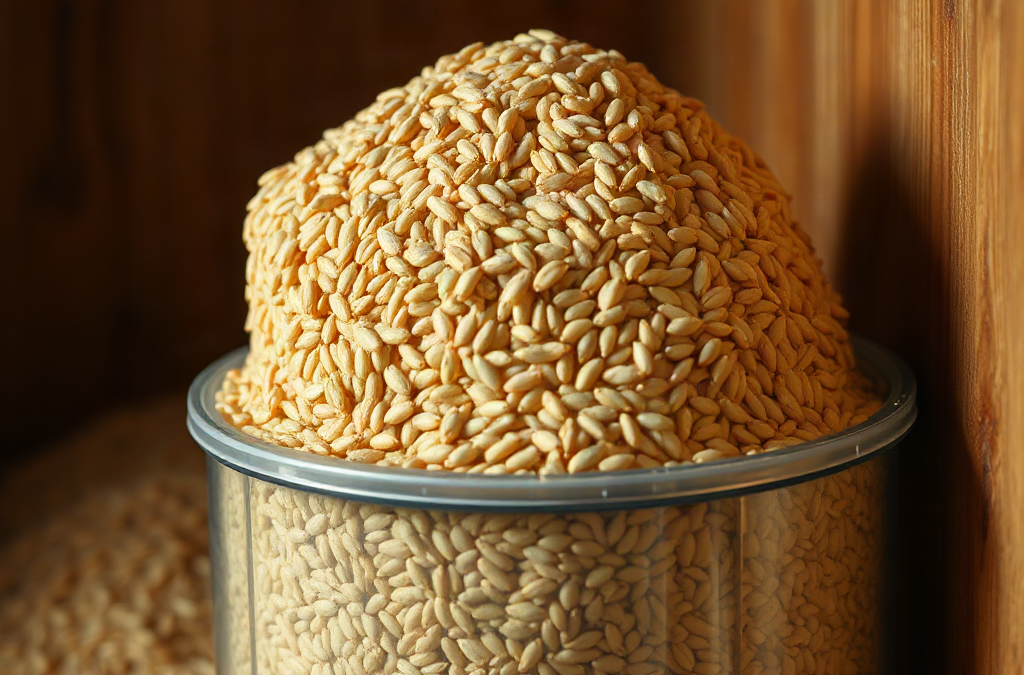
Safe grain storage after a power outage depends on checking grain temperature, moisture, airflow, and container integrity before restarting equipment or moving the crop. Dry grain in sealed household containers is usually unaffected by a brief outage, while damp grain in bins can heat, mold, bridge, or spoil when fans and monitoring systems stop. Inspect for condensation, unusual odors, insects, hot spots, and water intrusion without entering a grain bin. Restore monitoring first, then resume aeration or drying only after confirming that fans, vents, controls, and electrical components are safe to operate.
Determine What the Outage Changed
An electrical outage does not automatically ruin grain. The decisive issue is whether the interruption allowed moisture, heat, or water to accumulate. Shelf-stable grain that was already dry and sealed in sound food-grade packaging has little dependence on electricity. Grain being dried, actively aerated, mechanically monitored, or stored in a humid structure faces a different risk because the outage interrupts controls that were maintaining stable conditions.
Start by establishing the outage duration and the operating state at the moment power failed. A fan stopping for two hours during cool, dry weather is not equivalent to a dryer stopping overnight while warm, recently harvested grain remains above its intended storage moisture. Likewise, a basement container near a failed sump pump needs closer attention than an unopened bucket stored on a dry shelf. Write down when power was lost, whether drying or aeration was underway, recent weather conditions, and any alarms or controller settings that may have reset.
Heat and moisture move even when machinery is idle. Warm grain can continue releasing moisture into cooler portions of a mass, producing condensation near the top or along cold walls. Wet grain respires more rapidly and may support mold growth or insect activity. If floodwater, roof leakage, or fire-suppression water reached the storage area, contamination and direct wetting become higher priorities than the loss of ventilation itself.
Different storage arrangements therefore require different responses. For household supplies, inspect the room, packaging, and seals before opening containers unnecessarily. Repeatedly opening an unaffected bucket can introduce humid air and pests without providing useful information. For farm bins, review temperature cables, fan status, vents, roof condition, and the condition of grain visible from a safe exterior access point. Never assume that a silent controller means the grain stayed stable; the outage may have erased readings or interrupted remote alerts.
A practical first assessment should establish four facts:
- Power status: whether the supply is stable or cycling on and off.
- Grain condition before failure: dry and stable, being conditioned, or recently loaded.
- Environmental exposure: rain, flooding, high humidity, heat, or freezing weather.
- System dependence: whether fans, dryers, sump pumps, sensors, or automated vents were required.
The common mistake is treating outage length as the only measure of risk. Duration matters, but initial moisture and temperature usually matter more. A shorter interruption can be serious for warm, wet grain, while a longer interruption may have little effect on properly dried grain in intact sealed containers. That distinction should govern the rest of the recovery plan.
Inspect Grain Without Creating a Second Hazard
Inspection should move from the storage environment toward the grain, with the least invasive checks performed first. Confirm that the building is structurally sound, standing water is absent, and electrical panels, motors, extension cords, and outlets are not wet. If water reached electrical equipment, leave it de-energized until a qualified person can evaluate it. Restoring airflow is not worth risking shock, fire, or damaged machinery.
For packaged household grain, examine floors, shelves, walls, and container exteriors. Look for pooled water, damp cardboard, swollen paper sacks, rusted metal seams, loose lids, rodent damage, and condensation beneath clear packaging. A sound bucket or jar with no water exposure and no failed seal generally should remain closed. Move it to a dry location and mark it for a later recheck. Paper and cloth sacks offer far less protection; if they became damp, transfer unaffected dry grain promptly to clean, dry food-grade containers rather than waiting for the packaging to dry around it.
For bulk storage, compare readings from multiple locations when functioning sensors are available. A single surface reading cannot describe a deep grain mass. Rising temperatures in one zone, crusting, dampness under the roof, visible mold, or persistent musty odors can indicate moisture migration or spoilage. Odor is a warning signal, not a safety test: the absence of a bad smell does not prove that grain is dry, uncontaminated, or suitable for food or feed.
Do not enter a grain bin to investigate bridging, crusting, or suspected spoilage. Flowing grain can engulf a person, while bridged grain can collapse without warning. Moldy grain and accumulated gases may also create respiratory or atmospheric hazards. Inspect from outside using installed sampling, temperature, and access systems, and involve trained operators or emergency services when entry hazards exist. The same caution applies when attempting to break a crust from below; unloading equipment can pull a hidden cavity downward.
A moisture meter can improve the decision, but sampling technique controls the value of the result. Take representative samples from accessible approved points rather than testing only the driest-looking kernels near a door. Allow cold samples and the meter to reach compatible operating conditions according to the instrument instructions, because temperature differences may distort readings. For more context on container and room checks, use the site’s Safe grain storage after a power outage planning material alongside the equipment manufacturer’s procedures.
Signs of recovery include stable temperatures, no new condensation, dry packaging, and consistent moisture readings over time. Signs of failure include a temperature rise after conditions should have stabilized, recurring wall moisture, clumping, insect movement, sour or musty odors, and fan exhaust that remains warm or damp. Documenting those observations makes it easier to distinguish an existing wet pocket from a problem that is continuing to spread.
Restore Aeration, Drying, and Monitoring in the Right Order
Recovery should begin with reliable power and functional monitoring, not an automatic restart of every motor. Power restoration may include voltage fluctuations, tripped overloads, changed controller settings, reversed schedules, or damaged sensors. Verify the electrical supply, inspect equipment according to manufacturer instructions, and confirm that fan outlets and vents are open and unobstructed before energizing a system.
Restore temperature and moisture monitoring early because those measurements determine whether aeration, drying, unloading, or no immediate action is appropriate. Check whether stored alarm thresholds, fan schedules, and calibration settings survived the outage. A display that has returned to life may still be showing old data or default values. Compare automated readings with a separate instrument or manual observation where safe and practical.
Aeration and drying perform different jobs. Aeration primarily moves air to equalize or manage grain temperature; it should not be assumed to remove a large amount of moisture quickly. Drying applies sufficient airflow and suitable air conditions to lower moisture. Restarting an aeration fan during warm, humid weather may add moisture to cooler grain or create condensation in another part of the bin. Conversely, delaying airflow when a warm spot is developing may allow deterioration to accelerate. Local weather, grain temperature, moisture, crop type, bin design, and the intended storage period all affect the choice.
Get Whole Wheat Flour, Grains and Milling Supplies – CLICK HERE 
Consider a bin that lost power while warm grain was being dried. Simply resuming the old timer may be inadequate because the grain has continued redistributing heat and moisture while stationary. The operator should confirm grain condition, inspect the dryer and fan path, verify controls, and then resume conditioning under current rather than pre-outage conditions. If the grain is heating or the equipment cannot be restored promptly, moving it to functioning drying or storage capacity may be safer than waiting.
Portable generators introduce another set of constraints. A generator must be correctly sized for motor starting loads as well as running loads, connected through approved equipment, and operated where exhaust cannot enter occupied spaces. Improvised backfeeding can endanger occupants and utility workers. Fuel availability, grounding, transfer equipment, motor compatibility, and continuous supervision can make temporary generation impractical for a large fan or dryer even when the nameplate running wattage appears manageable.
After restart, observe the system rather than assuming airflow means success. Confirm fan rotation where applicable, listen for abnormal motor noise, check that air is actually reaching the intended vents, and watch for tripped breakers or overheating. Record temperatures and moisture at consistent intervals. The Safe grain storage after a power outage recovery sequence works best when each adjustment is followed by enough monitoring to reveal whether conditions are stabilizing or getting worse.
Decide Whether to Keep, Condition, Move, or Discard Grain
The disposition decision should be based on condition, exposure, intended use, and the ability to stop further deterioration. Grain that remained dry, cool, pest-free, and physically protected may need nothing beyond continued observation. Grain with elevated moisture but no apparent contamination may be a candidate for prompt drying or transfer. Grain exposed to floodwater, chemicals, sewage, smoke residues, or unknown contaminants requires a more conservative response than grain affected only by interrupted airflow.
Intended use changes the consequences of uncertainty. Seed grain must retain germination performance, food grain must meet applicable quality and safety requirements, and feed grain may still present mold or toxin concerns even when animals appear willing to eat it. Drying can slow biological activity, but it does not reverse contamination or reliably remove harmful compounds that may already be present. Cooking also should not be treated as a universal remedy for mold-damaged or flood-exposed grain.
Separate questionable lots from unaffected inventory. Label containers or bins with the outage dates, observed conditions, measurements, and actions taken. Avoid blending suspect grain into sound grain to dilute visible damage; blending can spread insects, odors, moisture, or contamination and make later evaluation more difficult. If only one paper sack became damp beside an otherwise dry row of sealed buckets, isolate that sack rather than opening every container in the room.
Use the following decision order:
- Keep and monitor grain that stayed protected and shows stable temperature, moisture, packaging, and odor.
- Condition promptly grain that is measurably too warm or moist but has no known contamination and can be handled by suitable equipment.
- Move or unload grain when the existing system cannot restore safe conditions, a localized hot spot is worsening, or structural water intrusion continues.
- Seek testing or professional evaluation when food, feed, seed, insurance, or commercial acceptance depends on quality that visual inspection cannot establish.
- Discard through an appropriate channel grain with confirmed or strongly suspected hazardous contamination rather than repurposing it casually.
Testing is especially useful when the grain has commercial value, visible mold is present, or moisture and heating persisted long enough to raise concern about quality. Contact a local extension service, grain laboratory, crop adviser, elevator, insurer, or relevant food or feed authority for sampling requirements before collecting a submission. A poorly collected sample may miss the damaged portion and provide false confidence.
The weak assumption is that grain can be declared safe because it looks normal after the fan runs. Airflow can cool a hot area and reduce odor without resolving the cause or establishing suitability for use. Continue checking for rebound heating, condensation, caking, and inconsistent readings. Update the written Safe grain storage after a power outage plan with backup power limits, inspection access, emergency contacts, and the measurements that will trigger movement or testing during the next interruption.
Frequently Asked Questions
Does dry grain spoil immediately when the power goes out?
No. Properly dried grain in intact, dry containers generally does not depend on continuous electricity. Risk rises when the grain was warm or wet, ventilation stopped, monitoring failed, or water entered the storage area.
Should grain-bin fans be restarted as soon as power returns?
Not automatically. Inspect the electrical system, fan, vents, controls, and grain condition first. Then compare grain and outdoor conditions so the airflow does not introduce humid air or move condensation into another zone.
Can damp grain be saved by drying it again?
Sometimes, if dampness is detected promptly and no hazardous contamination has occurred. Drying may halt further deterioration, but it cannot reverse mold damage, remove every toxin, or make flood-contaminated grain suitable for use.
Is grain safe if it smells normal after the outage?
A normal smell is not proof of safety. Check moisture, temperature, packaging integrity, water exposure, insects, clumping, and intended use. Testing may be appropriate when food, feed, seed, or commercial quality is uncertain.
When should a professional evaluate stored grain?
Seek help when grain is heating, visibly moldy, bridged, flood-exposed, commercially valuable, or unsafe to inspect without entering a bin. Extension services, testing laboratories, electricians, and trained grain-storage operators address different parts of the problem.
Conclusion
A power failure becomes a grain-storage emergency when it changes moisture, temperature, airflow, sanitation, or the ability to monitor the crop. Establish what was operating before the outage, inspect the building and equipment without entering hazardous bins, and obtain representative condition readings before choosing a response. Stable dry grain may only need observation; warm or damp grain may require controlled aeration, drying, transfer, or laboratory evaluation. Keep water-exposed and questionable lots separate from sound inventory, and never assume that cooling, normal appearance, or acceptable odor proves suitability for food, feed, or seed. Once conditions stabilize, record what happened and set clear thresholds for generator use, equipment inspection, sampling, and grain movement before the next outage.
Get Whole Wheat Flour, Grains and Milling Supplies – CLICK HERE
Auto Amazon Links: No products found.
Further Reading
Authoritative Sources
- Is my food still safe after power outages?
extension.oregonstate.eduFood safety in power outages. Here are some food storage and safety tips during a power outage: Keep refrigerator and freezer doors closed as much as possible.
- Power Outage Safety Checklist: Before, During, After
poweroutage.usFood safety: Keep the refrigerator closed. It stays safe for up to 4 hours; a full freezer holds for up to 48 hours. Medical needs: Track battery runtime on all ...
- Food Safety After a Power Outage - Sonoma County Emergency
socoemergency.orgCover open refrigerated and frozen food cases, Check temperatures every 4 hours. No hot water, inadequate water pressure.
- How long is food good for after the power goes out?
servpro.comAfter four hours without power, toss perishable foods; visit FoodSafety.gov for a complete guide to assist with what to keep and what to discard ...