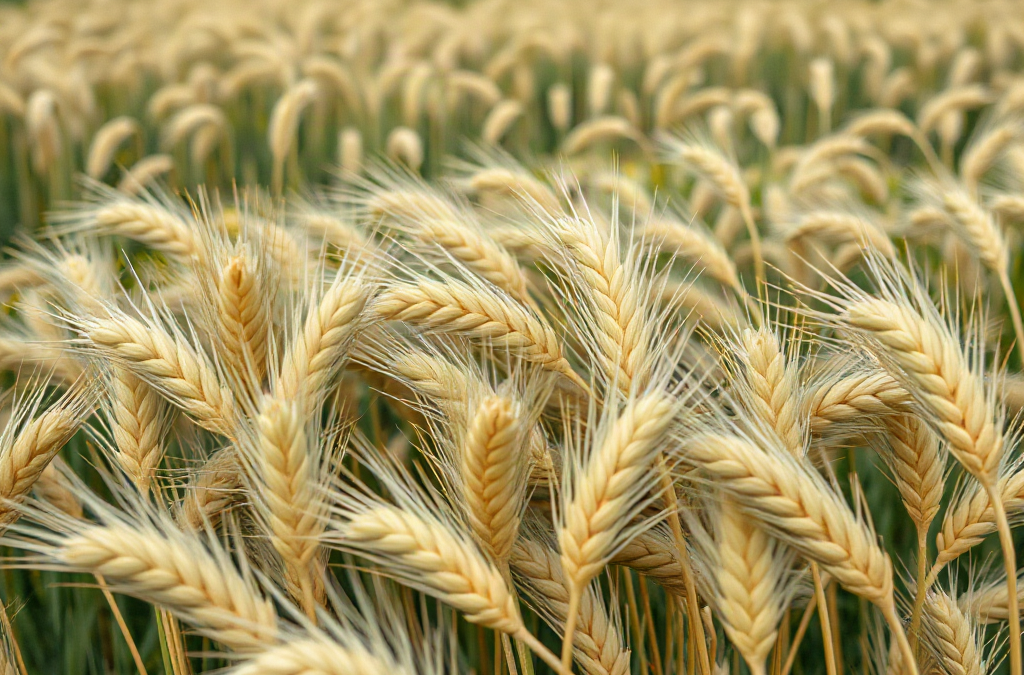
Wheat fields and regional storage climate differences are linked through harvest moisture, local humidity, temperature swings, and the storage system available after combining. Wheat grown in a dry interior region may enter storage with less ambient moisture pressure, while grain from humid or coastal areas can regain moisture during handling and aeration. Hot climates demand early temperature control, whereas cold regions must manage condensation when warm grain meets chilled bin surfaces. Storage decisions should therefore follow measured grain temperature and moisture, not regional reputation alone.
How Does Field Climate Follow Wheat Into Storage?
Field weather affects stored wheat long after the combine leaves the crop. Rain near maturity, heavy dew, high nighttime humidity, uneven field drying, and hot harvest conditions all influence the moisture and temperature distribution entering a bin. A single average moisture reading can conceal wetter kernels, damp material from low areas, or hot grain harvested during the afternoon. Those pockets matter because deterioration begins locally rather than uniformly across an entire grain mass.
The field also contributes dockage and damaged kernels. Weed seeds, chaff, broken wheat, and fine material restrict airflow when they collect beneath the filling point or along bin walls. These materials may hold more moisture than sound kernels and are more vulnerable to heating. A load that meets an acceptable average moisture level can therefore remain risky when fines form a dense central column. Coring the bin after filling, where appropriate, removes part of that concentration and creates a more even path for aeration air.
Regional assumptions often fail at this stage. Wheat from a semi-arid district is not automatically ready for extended holding, particularly after an unusual rain or when harvested before damp straw and green weeds have dried. Conversely, grain produced in a humid region is not necessarily unsafe if it was tested accurately, dried when needed, and cooled promptly. The condition of the actual grain lot is more useful than the usual climate label attached to its growing area.
A representative sampling method is the first practical safeguard. Samples should reflect multiple loads, field zones, and times of day rather than one convenient scoop from the top of a truck. Moisture meters need to be appropriate for wheat and checked for calibration because temperature, handling, and sampling technique can affect readings. When results vary, segregating wetter loads is safer than blending them into a larger mass and hoping the average will remain stable.
Keep field records with the storage record. Note harvest date, field or variety, moisture range, visible damage, drying treatment, and destination bin. If one bin later develops a warm spot or musty odor, those records help distinguish a field-related problem from roof leakage, poor airflow, or an aeration decision. The common mistake is treating harvest as the end of crop management; for stored wheat, harvest conditions become the starting data for storage management.
How Do Dry, Humid, Hot, and Cold Regions Differ?
Each climate creates a different dominant pressure, but no region removes the need for monitoring. Dry interiors generally offer more hours when ambient air can cool grain without adding moisture. Their disadvantages include very hot harvest temperatures, large day-to-night swings, and the temptation to assume low outdoor humidity guarantees safe grain. Humid regions have fewer favorable aeration windows and greater exposure to moisture migration from outside air, roof leaks, and condensation.
| Regional Pattern | Primary Storage Pressure | Management Priority | Common Failure |
|---|---|---|---|
| Hot and dry | High grain temperature and insect activity | Cool during suitable nighttime conditions | Storing dry but hot wheat without follow-up cooling |
| Hot and humid | Limited cooling windows and moisture exposure | Use measured air conditions and inspect frequently | Running fans continuously during unsuitable weather |
| Cold continental | Strong temperature gradients and condensation | Cool in stages and check the top center | Leaving warm grain against cold walls |
| Coastal or mild | Persistent humidity and small seasonal cooling gains | Protect against moisture entry and watch trends | Assuming mild temperatures mean low spoilage risk |
Cold climates can preserve grain well after it has been cooled, yet the transition into winter creates a specific hazard. The bin wall and outer grain cool before the center. Air within the grain mass moves through convection, carrying warmth and moisture upward. Moisture may then collect near the top center, where crusting or spoilage can appear even though grain near the access point feels cold. Snow entering through vents or openings adds another localized source of water.
Hot, humid areas face the opposing constraint: there may be few long periods when outdoor air is both cool and suitable for aeration. Fan operation based only on the clock can introduce moisture or fail to reduce grain temperature. A manager may need to use shorter weather windows, verify the temperature response within the bin, and accept that mechanical drying or temperature-control equipment is more valuable there than in a dry region with cool nights.
Coastal and mild climates deserve separate attention because moderate outdoor temperatures can disguise persistent moisture pressure. Grain may not experience extreme heat, but high relative humidity, salt-laden air around exposed metal, and frequent weather changes complicate long-term holding. The practical comparison is not simply dry versus wet. It is whether the region regularly provides air that can move the grain toward a safer moisture-temperature condition and whether the bin can use those opportunities without admitting rain or pests.
Matching Aeration and Bin Management to Climate
Aeration should move a controlled cooling front through the grain rather than serve as general ventilation. Fans do not automatically dry wheat, and poorly timed airflow may add moisture. Their main storage role is to make grain temperature more uniform and reduce the warm zones that favor insects, moisture migration, and biological heating. The suitability of outside air depends on its temperature and humidity as well as the wheat’s current condition.
In a dry high-plains setting, a sensible sequence may be to fill the bin with warm harvest grain, level or core it, and use cooler nighttime air to lower its temperature in stages. Stopping too early can leave the cooling front partway through the mass. The bottom may feel cool while warmer grain remains above it. Temperature cables, exhaust-air observations, and calculated fan run time can help show whether the front has passed through the full depth.
In a humid river valley, the same fan schedule could be counterproductive. Long operation during warm, damp weather may increase grain moisture near the air inlet before conditions change deeper in the bin. Automated controls can select better air periods, but sensors still require verification. A failed humidity sensor or a temperature probe surrounded by fines can create misleading confidence. Manual inspection remains necessary, especially after storms or abrupt seasonal changes.
Bin design changes what is practical. Deep grain, limited fan capacity, compacted fines, partially blocked ducts, and an uneven surface all increase resistance to airflow. A small fan cannot be made effective merely by running it longer if air is escaping through an easy path while another zone receives little movement. Before filling, inspect the floor, ducts, fan housing, vents, roof seals, and unloading system. After filling, confirm that exhaust air emerges across the grain surface rather than from only one area.
Get Whole Wheat Flour, Grains and Milling Supplies – CLICK HERE 
Drying and aeration should not be treated as interchangeable. Drying removes meaningful quantities of water using air conditions and equipment intended for that purpose; aeration primarily manages temperature with lower airflow. Grain that is too wet for its intended storage period should not be rescued by assuming a standard aeration fan will eventually correct it. Segregation, prompt drying, shorter holding time, or earlier marketing may be the safer choice.
Signs that the approach is working include a cooling front that progresses predictably, smaller temperature differences among monitoring points, no new condensation, and stable grain condition during inspection. Warning signs include rising temperatures without a weather explanation, musty odor, insect activity, crusting, damp grain beneath the roof, or fan performance that changes unexpectedly. Those findings call for immediate investigation rather than simply adding more fan hours.
A Regional Storage Monitoring Checklist
Monitoring frequency should reflect the grain’s risk and the speed of local weather changes. Newly stored, warm, uneven, or borderline-moisture wheat deserves closer attention than uniformly dry grain that has already been cooled. Inspection intervals also need to tighten during major seasonal transitions, prolonged heat, heavy rain, or sudden cold. A fixed calendar used without reference to conditions can miss a problem developing between routine visits.
Start with a baseline immediately after filling. Record moisture results from representative samples, grain temperature at available points, bin depth, estimated dockage, fan status, and any loads kept separate. Then compare later readings with that baseline. Trends are more revealing than an isolated number: one sensor that rises while outdoor temperatures fall may indicate biological heating, sensor error, or an airflow problem that deserves confirmation.
- Check the structure: Look for roof leaks, open hatches, damaged seals, blocked vents, and water around the foundation.
- Compare temperatures: Review differences between the center, perimeter, upper grain, and lower grain where instrumentation allows.
- Inspect grain condition: Watch for condensation, crusting, unusual odor, insects, clumping, or discolored kernels.
- Verify airflow: Confirm that fans operate normally and that vents are not obstructed by debris, ice, or nesting material.
- Match action to cause: Cool a warm mass under suitable air, address water entry directly, and move or dry grain when aeration cannot correct the condition.
A warm spot should be verified rather than dismissed or treated blindly. Recheck the sensor, compare nearby readings, inspect the grain surface safely from an approved access point, and consider recent fan operation and weather. Entering a grain bin is hazardous because flowing grain, engulfment, toxic atmospheres, and mechanical equipment can be fatal. Inspection and corrective work must follow applicable safety procedures, including lockout and appropriate trained assistance.
The most frequent monitoring mistake is collecting data without defining an action threshold. Records have little value if no one decides what temperature trend, moisture change, odor, insect finding, or structural leak will trigger intervention. Write a bin-specific response plan before trouble appears. A remotely monitored commercial bin and a small on-farm bin may use different tools, but both need clear responsibility for checking readings and responding.
Regional planning should also account for power reliability, fuel cost, labor, and the likely duration of storage. Holding wheat briefly through cool weather presents a different exposure than carrying it across a humid summer. When controls, fan capacity, or labor are limited, prioritize the highest-risk bins: those containing warmer grain, variable moisture, substantial fines, prior insect problems, or evidence of water entry. Good storage management is not equal attention everywhere; it is earlier attention where deterioration is most likely to begin.
Frequently Asked Questions
Does wheat from a dry region always store better?
No. A dry regional climate may provide favorable aeration air, but hot harvest temperatures, wet field pockets, damaged kernels, and concentrated fines can still make a lot unstable.
Can humid outside air add moisture to stored wheat?
Yes. Grain exchanges moisture with surrounding air, so prolonged aeration under unsuitable temperature and humidity conditions may wet part of the grain mass instead of improving it.
Why does condensation form near the top of a cold-climate bin?
Temperature differences can move warm, moisture-bearing air through the grain toward the colder upper surface, where water condenses and may create a damp or crusted zone.
Is aeration enough when harvested wheat is too wet?
Not necessarily. Low-airflow aeration is mainly intended for temperature management. Wheat above the suitable moisture condition for its holding period may require drying, segregation, or a shorter storage duration.
What should be checked first after a major weather change?
Inspect the roof and vents for water entry, compare grain temperatures across the bin, look for condensation at the surface, and verify that fans and sensors are functioning normally.
Conclusion
Regional climate sets the boundaries for wheat storage, but measured bin conditions determine the next action. Preserve representative harvest records, remove or manage concentrated fines, and establish a temperature and moisture baseline as each bin is filled. Then use aeration only when outside air can move the grain toward the intended condition, confirming that the cooling front reaches the entire mass.
Dry regions should not ignore hot grain, humid regions should not run fans by habit, and cold regions should watch for upper-bin condensation during seasonal transitions. Structural water entry, rising temperature trends, insects, odor, or crusting require investigation rather than delayed observation. Match monitoring effort to the riskiest grain and the planned holding period, and use drying, segregation, movement, or earlier sale when the installed system cannot safely correct the problem.
Get Whole Wheat Flour, Grains and Milling Supplies – CLICK HERE
Auto Amazon Links: No products found.