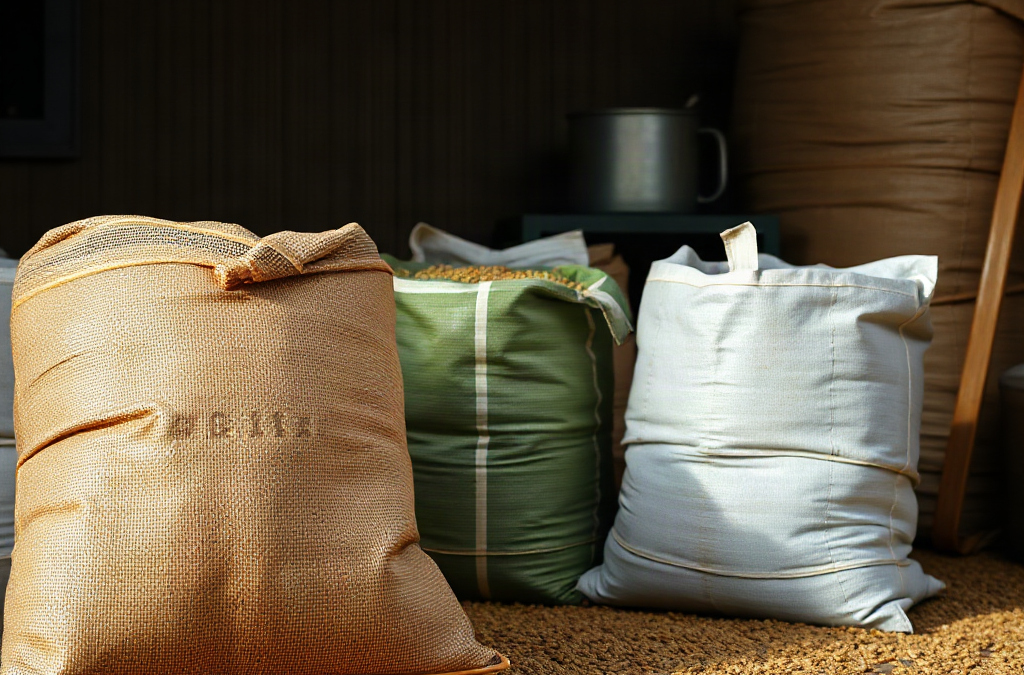
Prevent grain bags from tearing by matching the bag material to the grain weight, leaving enough headspace for secure closure, and supporting each bag from underneath during lifting. Keep filled bags away from nails, splintered pallets, sharp shelf edges, and rough concrete that can puncture woven polypropylene or paper layers. Stack bags in stable, interlocked rows without crushing the bottom tier, and use a hand truck or pallet rather than dragging them. Inspect seams, closures, and abrasion marks before moving stored grain; transfer any weakened bag into a sound outer sack or food-suitable rigid container before the damage becomes a spill.
Why Do Grain Bags Tear?
Bag failures usually begin at a concentrated stress point rather than across the broad face of the material. An overfilled sack pulls continuously against its seam and closure, while a nail, pallet splinter, or shelf corner focuses the bag’s weight onto a tiny area. Once a few fibers break or a paper layer is punctured, normal lifting and shifting can enlarge the damage rapidly.
The failure pattern depends on the packaging. Woven polypropylene sacks commonly develop abrasion damage, pulled stitching, or small punctures between strands. Multiwall paper bags are more vulnerable to wetting, repeated flexing, and sharp folds. Natural-fiber sacks may weaken through wear or damp conditions. A liner can contain kernels after the outer sack is damaged, but it does not make an unsuitable outer bag capable of carrying more weight.
Grain itself affects the load. Dense kernels settle after filling, creating pressure near the base and lower corners. If a loosely filled bag is dropped, the contents move suddenly and strike the bottom seam. Fine grain or flour can escape through an opening too small to release larger kernels, so a minor seam defect may still create a substantial mess.
Handling surfaces often reveal the cause. Parallel scuff marks point to dragging. A clean puncture suggests contact with a protruding fastener or sharp tool. A split beside the closure may indicate overfilling or lifting by the gathered top. Damage concentrated along the bottom fold commonly follows dropping, sliding, or prolonged pressure against an uneven pallet.
Do not assume a heavier-looking bag is automatically tougher. Material thickness, weave density, seam construction, prior use, ultraviolet exposure, and moisture history all influence performance. A reused sack may appear intact while its fibers have already lost strength along folds and high-wear areas. Before filling, open the bag fully and inspect it against good light. Check the base seam, side seam, corners, closure area, and any pale, fuzzy, or stretched patches. Rejecting a questionable empty bag is easier than containing a full one after it splits.
How Do You Choose a Bag That Can Carry the Load?
The safest bag is one intended for the product, fill weight, closure method, and handling conditions involved. Supplier specifications should identify the bag’s intended capacity and construction; physical dimensions alone do not establish a safe load. Two sacks of similar size may use different fabric, paper plies, thread, or seam designs and therefore perform differently under the same weight.
Woven polypropylene is often practical where bags will be handled repeatedly because it resists ordinary flexing and minor surface moisture better than paper. Its weave can still snag on wire, rough timber, and projecting hardware. Multiwall paper offers a firm shape and useful product containment but should be protected carefully from damp floors, condensation, and tearing at creases. A lined sack may improve containment and moisture control, although the liner and outer bag must be compatible with the stored food and intended conditions.
Choose the closure as part of the package rather than as an afterthought. A securely sewn mouth spreads force differently from a bag twisted and tied at one point. Heat sealing may be appropriate only for materials designed for that process and requires the correct equipment settings. Improvised staples, exposed wire, and sharp fasteners can initiate tears or puncture neighboring sacks in a stack.
Use these checks before committing an entire grain batch to one package type:
- Capacity: Confirm the intended fill weight instead of estimating from volume.
- Seams: Look for even stitching, intact thread, and no skipped or loose sections.
- Surface: Reject holes, brittle folds, heavy abrasion, contamination, or previous repairs of uncertain strength.
- Closure: Ensure enough unfilled material remains to close the mouth without straining it.
- Environment: Account for pallets, stacking height, humidity, transport, and frequency of handling.
A common false economy is reusing sacks indefinitely because they held the same weight before. Each trip can add abrasion, crease fatigue, and seam wear. Reuse should depend on inspection and suitability, not appearance from a distance. For household quantities moved often, several moderate bags may be easier to control than one large sack. More bags mean more closures and more surfaces to inspect, but each unit places less strain on the handler and is less damaging if dropped.
How Should Grain Bags Be Filled, Closed, and Lifted?
Controlled filling protects both the closure and the bottom seam. Support the empty bag upright in a clean holder or stable container so it does not scrape across the floor as its weight increases. Add grain steadily rather than dumping a large mass from height. Sudden impact compacts kernels at the bottom and can shock a weak seam before the bag has even been moved.
Stop at the bag’s specified capacity and preserve enough headspace for the intended closure. A bag that closes only after someone kneels on it or pulls the mouth under tension is overfilled, even if the contents technically fit. Excess pressure becomes more severe when the grain settles or the sack is laid on its side. Weighing filled bags is more dependable than judging fullness by eye, especially when changing from a light grain to a denser one.
Before closing, clear kernels from the sealing or stitching area. Trapped grain can interfere with a seal, deflect a needle, or create a hard point that rubs through adjacent material. Follow the bag or closure-equipment instructions rather than combining incompatible tape, adhesive, stitching, or heat. Trim thread or closure material without leaving sharp ends that can catch another sack.
Lifting technique matters because a filled bag behaves like a shifting load. Grabbing the tied mouth suspends the entire weight from the closure and concentrates force where the material has already been folded. Instead, support the base and stabilize the upper portion. If the bag is too heavy or awkward for one person to control without dragging, use two people or suitable handling equipment.
A hand truck with a smooth toe plate is useful for short movements, provided the sack does not rub against wheel hardware. For larger batches, filling and closing bags on a pallet reduces the number of individual lifts. Forks must enter the pallet openings cleanly; catching a low bag with a fork tip can puncture it immediately. Keep knives, bag-sewing equipment, and sampling probes in designated positions so they are not left under or beside filled sacks.
Dropping a bag the final few inches may appear harmless, but repeated impacts work the corners and bottom seam. Set it down onto a clear, level surface. Signs that handling needs correction include fresh white stress marks, stretched weave, leaking dust, popped stitches, or damage appearing in the same location on multiple bags. Repeated patterns usually implicate the filling station, conveyor edge, cart, or lifting habit rather than random defects.
How Can Bags Be Stacked and Stored Without Damage?
A sound stack distributes weight broadly and remains stable without forcing lower bags against damaging surfaces. Begin with a clean, dry, serviceable pallet or raised platform. Run a gloved hand over accessible boards to find splinters, protruding nails, broken deck boards, and rough repair plates. A thin sheet of appropriate smooth material over the pallet can reduce snagging, but it cannot make a structurally damaged pallet safe.
Get Whole Wheat Flour, Grains and Milling Supplies – CLICK HERE 
Place bags flat and square rather than balancing them on corners or closures. Alternating the orientation of successive rows can help tie the load together when bag shape and site practice allow it. Keep the stack plumb, with no sack projecting far enough to catch passing equipment. Closures should not be positioned where the next layer presses sharply against knots, ties, or folded material.
Stack height must reflect bag strength, floor capacity, handling equipment, and stability. There is no universal safe number of tiers for every sack and grain. A tall stack saves floor area but increases compression on the bottom row and raises the consequences of leaning or collapse. Shorter stacks are often preferable where bags are handled manually, frequently rotated, or stored on imperfect floors.
Clearance around the stack provides practical protection. Keep bags away from rough masonry, exposed fasteners, hot surfaces, leaking pipes, and traffic lanes. Do not press sacks tightly against a wall merely to gain space; removal can then require dragging, and hidden dampness or pests may go unnoticed. Leave enough access to inspect the sides and retrieve older stock without dismantling an unstable tower.
Moisture contributes indirectly to tearing as well as directly weakening some materials. Wet paper loses useful strength, while damp grain conditions can create additional storage problems beyond packaging damage. Never place a bag over a spill and assume the pallet will isolate it. Correct the moisture source, clean and dry the area, and assess any exposed package before restacking.
Rotation should minimize unnecessary movement. Label each bag clearly before stacking and arrange batches so the next grain to be used is accessible. If every retrieval requires climbing, pulling a lower sack, or sliding bags across one another, the layout is working against the packaging. A stable stack, visible labels, smooth contact surfaces, and a planned removal path offer more protection than wrapping a poorly arranged pile and hoping it remains undisturbed.
Inspecting and Managing Weakened Bags
Routine inspection should focus on change: new scuffs, loosened seams, leaning stacks, grain dust, or kernels beneath a pallet. A few kernels on the floor may be the first evidence of a pinhole hidden between two sacks. Investigate the source rather than sweeping the spill away and leaving the load untouched.
Inspect before filling, after closing, after transport, and periodically during storage. Give extra attention to the bottom row, exposed corners, contact points beside walls, and bags removed from the middle of a stack. Good lighting helps reveal stretched weave and small punctures. Avoid pulling a suspect sack free while it still bears weight from above; unload the surrounding area safely first.
A patch is not automatically a structural repair. Tape may contain a tiny, clean puncture temporarily on a dry surface, but adhesion varies by bag material, dust level, temperature, and wear. It should not be trusted to restore a failing seam or carry a heavily loaded sack. Sewing through weakened fabric can create more perforations unless the repair method is designed for that bag.
For a damaged but uncontaminated bag, the dependable response is usually containment or transfer. Place the entire package in a sound overbag if it can be moved without widening the tear, or carefully transfer the grain into a clean, suitable replacement package or food-suitable container. Keep the damaged area uppermost during the move and support the base. If grain contacted a dirty floor, chemicals, standing water, pest residue, or unknown contamination, packaging repair alone does not resolve the product-safety concern; segregate it and obtain appropriate food-safety guidance rather than mixing it back into the batch.
Record repeated failures by bag type and location. If several sacks split at the same seam, stop using that batch until the packaging is assessed. If damage appears only on one shelf or pallet, inspect the surface and movement path. Success is visible when sacks retain their shape, closures remain relaxed, no grain dust appears under stacks, and handling no longer produces matching scuff patterns. Failure is indicated by recurring leaks, strained closures, frayed contact areas, or workers needing to drag bags because the layout provides no lifting access.
Frequently Asked Questions
Can a torn grain bag be repaired with tape?
Tape may temporarily contain a small puncture on a clean, dry surface, but it does not reliably restore a split seam or weakened carrying strength. Overbag or transfer the grain before further handling.
Is it safe to lift a grain bag by its tied top?
No. Lifting by the tied or sewn mouth concentrates the full load at the closure. Support the bottom while stabilizing the upper part of the sack.
Should grain bags be stored directly on concrete?
A sound pallet or raised platform is preferable because rough concrete can abrade bags and floor moisture may weaken packaging. Inspect the pallet for nails, splinters, and broken boards first.
How full should a grain bag be?
Fill only to the bag manufacturer’s intended weight and leave enough headspace for a closure that is not under tension. Bag size alone is not a reliable capacity rating.
Why do grain bags split along the bottom seam?
Common causes include overfilling, dropping, grain striking the base during rapid filling, dragging, and wear against an uneven pallet. Repeated failures in one location warrant checking both the bags and the handling surface.
Conclusion
Durable handling begins before grain enters the sack. Confirm that the packaging is rated for the intended load, reject worn seams and abraded material, and leave sufficient room for a low-stress closure. During movement, support the base, avoid drops and dragging, and use carts or pallets when a load cannot be controlled comfortably.
Storage conditions then determine whether a sound bag stays sound. Smooth pallets, moderate stable stacks, dry surroundings, clear access, and visible batch labels reduce punctures and unnecessary movement. Inspect for dust, loose kernels, frayed fibers, and strained stitching rather than waiting for a large spill. When damage appears, relieve the load safely and transfer or overbag the grain; do not expect tape to restore structural strength. Repeated tears in the same place should trigger an inspection of the filling station, travel route, pallet, shelf, and handling method.
Get Whole Wheat Flour, Grains and Milling Supplies – CLICK HERE
Auto Amazon Links: No products found.